Splitting the Wall with Gorgeous Bathroom Color Ideas and Chair Rails
Splitting the Wall with Gorgeous Bathroom Color Ideas and Chair Rails
The Smartest Design Move in Your Bathroom Might Already Be on the Wall
Choosing the right bathroom color with chair rail molding is one of the fastest ways to transform a plain, forgettable bathroom into a space that feels intentional and designed. But it also raises a lot of questions — which colors go above and below? Should the rail match the trim or the wall? Does the height of the rail even matter?
Here is a quick answer to get you started:
Best color strategies for a bathroom with a chair rail:
- Dark above, light below — Place the deeper color on the top half of the wall to add visual interest to the room.
- Match the rail to the trim, not the wall — Paint the chair rail (or wainscoting) the same color (usually white or off-white, satin finish) as your baseboards and door casings.
- Two-tone classics that work in 2026 — Navy and white, sage and cream, lilac and warm greige, charcoal and soft gray.
- Tile below, paint or wallpaper above — Use the rail as a clean transition line between moisture-resistant tile and a painted or papered upper wall.
- Same color top and bottom — In post-1970s homes, painting both halves the same shade with different sheens (flat above, satin below) gives a modern, low-fuss look.
Chair rails were originally built to protect plaster walls from the backs of dining chairs. In a bathroom, they serve a different purpose entirely: they act as a design divider, a moisture barrier, and an architectural detail that can make a small room feel layered and custom-built.
The catch? Getting the colors wrong — or ignoring how the rail’s height interacts with your vanity, tile, and ceiling — can make the whole room feel chopped up and dated instead of polished.
Our design team can walk you through every major decision: color combinations, material transitions, paint finishes, rail height, and how to modernize a chair rail you’re stuck with.
Designing with a Bathroom Color with Chair Rail: The Impact of Home Age and Height
When we consult with homeowners on Chicago bathroom design projects, we always look at the structural bones of the property first. A historic Queen Anne home in Evanston, IL, or a vintage brick bungalow in Irving Park requires a fundamentally different design vocabulary than a sleek high-rise condo in Lakeshore East.
Integrating a Chair Rail in Bathroom layout is highly dependent on both the architectural era of your home and the vertical proportions of the space.
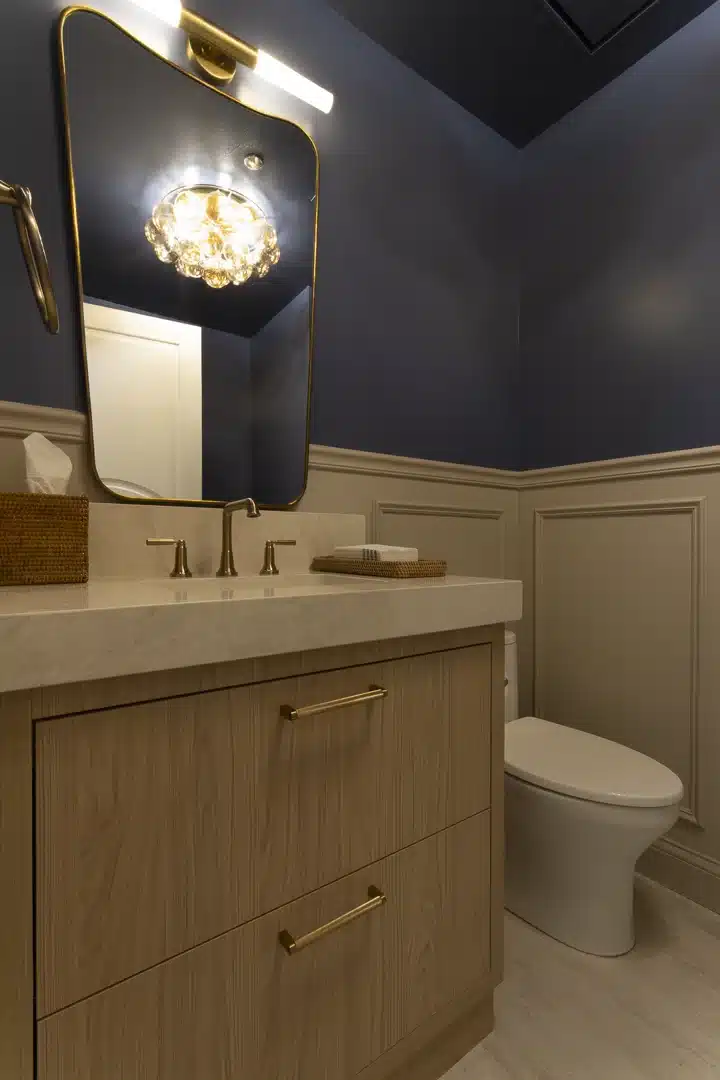
Historic vs. Modern: Choosing a Bathroom Color with Chair Rail by Era
The age of your home is the best starting point for deciding how to paint your split walls.
For older, historic, or heritage homes (pre-1970), a classic two-tone color palette is highly period-appropriate. These homes were built with custom millwork meant to stand out. In these properties, we lean into contrast: a rich, grounded tone below the rail and a soft, light-reflecting neutral above. This structure highlights the craftsmanship of the original molding and honors the home’s historic integrity. Choosing these classic palettes ensures you end up with timeless bathroom color schemes that you will still love a decade from now.
Conversely, for post-1970s homes, a traditional two-tone paint scheme can sometimes feel dated—throwing the room back to the late 1990s or early 2000s in an unappealing way. If your home has a modern or transitional layout, we recommend a monochromatic look. Painting the walls above and below the chair rail the exact same color, but utilizing different paint sheens, gives a highly updated, textured look. This monochromatic trim approach minimizes the visual clutter of the horizontal divider while still retaining the subtle architectural depth that makes a custom space feel high-end.
How Height and Scale Dictate Your Bathroom Color with Chair Rail Choices
The vertical placement of your chair rail changes how you perceive the entire room. In the 1990s, the standard height for a chair rail was approximately 36 inches from the floor. However, newer installations in 2026 are often placed higher, around 40 to 42 inches—or even up to 48 inches—depending on the height of your ceilings and vanity.
To avoid making your bathroom feel chopped in half or visually cramped, keep these vertical rules in mind:
- The Rule of Thirds: For standard 8-foot ceilings, keeping the chair rail in the lower third of the wall (about 32 to 36 inches) creates a grounding effect. This allows you to use a darker bathroom color with chair rail on the bottom and a light color on top, which draws the eye upward and makes the ceiling feel taller.
- Vanity Alignment: In compact spaces like powder rooms, we sometimes align the chair rail with the top of the vanity or sink splash. This creates a continuous, clean horizontal line around the room, which reduces visual noise and makes the space feel wider.
- The Elevated Rail: If you have high ceilings (9 feet or more), raising the chair rail to 42 or 48 inches is an excellent way to ground a bold wallpaper pattern on the upper wall. The higher rail anchors the room, preventing the pattern from overwhelming the space.
Top Color Combinations and Material Transitions for Split Walls
Once you have established the architectural scale of your bathroom, it is time to choose the actual color palette and material transitions. Because bathrooms are highly functional spaces, the chair rail is the perfect tool to transition between hard, moisture-proof materials and soft, decorative elements. Consulting a Guide to Bathroom Color Palettes can help you coordinate these choices with your existing tile, fixtures, and finishes.
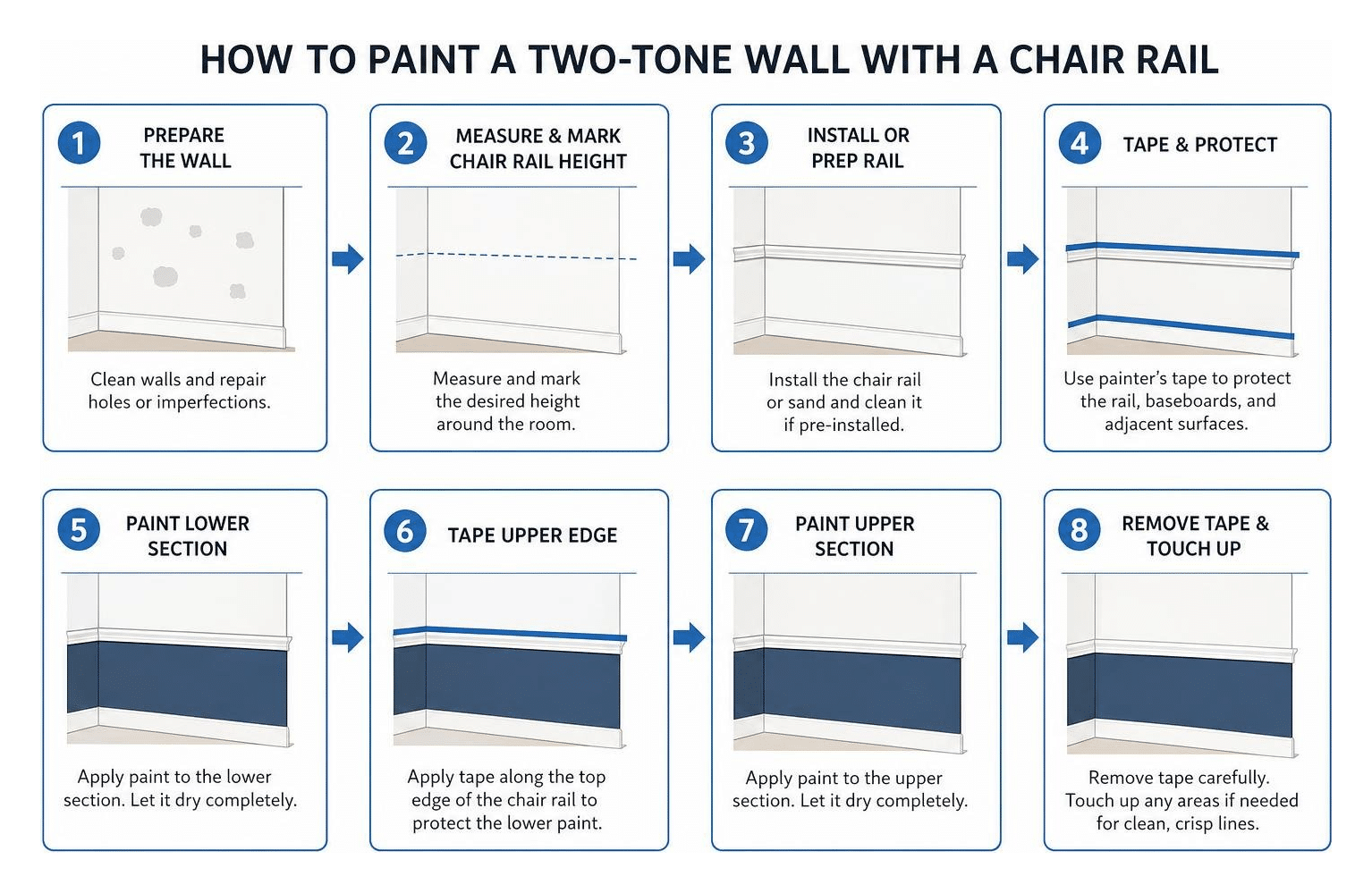
Two-Tone Palettes: Bold Contrasts and Soft Pastels
Creating a beautiful two-tone design relies heavily on color theory. When you want to find creative ways to add color to your neutral bath, a chair rail is your best friend. Here are some of the most popular and successful color combinations we are designing for clients in 2026:
- Navy Blue and Crisp White: A classic coastal or traditional favorite. Placing deep navy beadboard on the bottom half with a clean white upper wall makes the space feel incredibly crisp, clean, and anchored.
- Blush Pink and Slate Black: A modern, slightly feminine alternative to stark black-and-white. The softness of the blush pink above contrasts beautifully with a moody, dark lower wall.
- Sage Green and Warm Cream: Green remains the strongest bathroom color trend with documented staying power. A dusty sage green below paired with a warm cream on top creates a calming, spa-like sanctuary.
- Contemporary Lilac and Pewter Mist: Lilac is having a quiet, sophisticated moment in 2026. By pairing a gray-based lilac on the upper walls with a warm greige (like pewter) on the vanity and trim, you prevent the pastel from looking too sweet or childish.
Transitioning from Tile to Paint or Wallpaper
One of the most practical uses of a chair rail in bathroom remodeling is transitioning between different wall materials. In full bathrooms, moisture is always a concern.
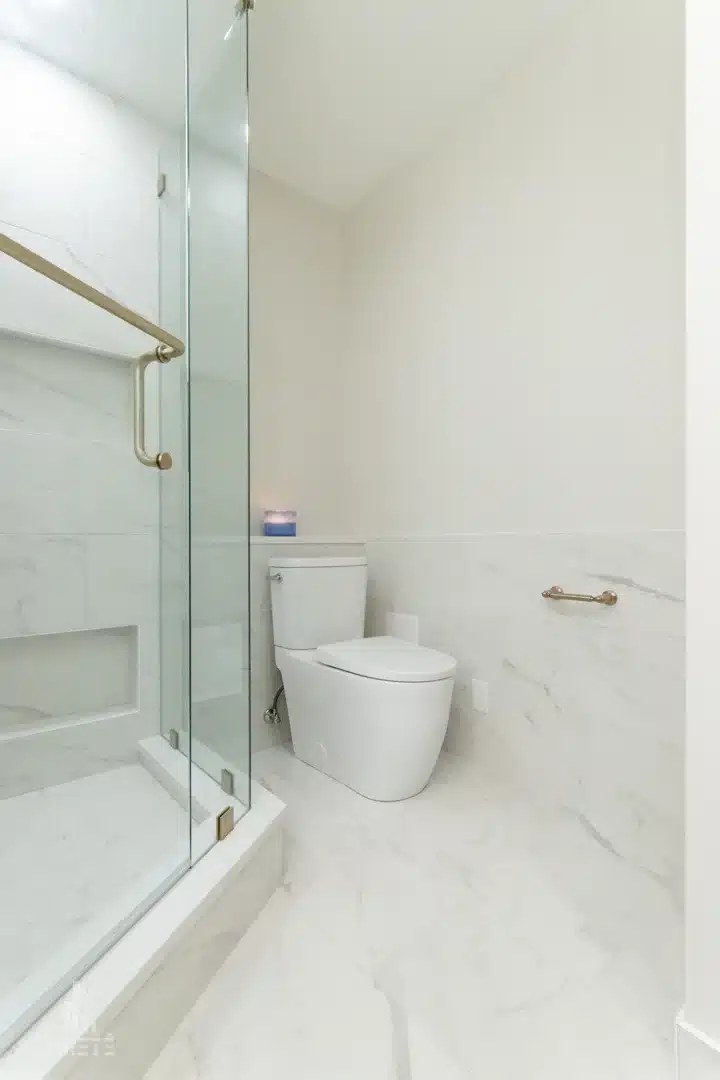
By installing durable ceramic, porcelain, or marble subway tile on the lower half of the wall (where splashes from the tub, sink, and toilet are common) and capping it with a marble chair rail trim, you protect your drywall from water damage. Above this stone transition, you can safely apply a bold, textured wallpaper or a premium paint color.
Using a stone or tile chair rail to cap a wet-area wainscoting is an excellent way of using texture to soften the clinical bathroom, replacing cold, floor-to-ceiling tile with warm, tactile drywall finishes on the upper half.
To Match or to Contrast? Painting the Chair Rail vs. the Trim
A common design dilemma during a bathroom renovation is deciding what color to paint the physical chair rail itself. Should it blend into the wall, match the baseboards, or stand out as an accent?
Pros and Cons of Matching the Wall Color
There are two primary design philosophies here: painting the chair rail the same color as the trim (usually a semi-gloss white), or painting it the same color as the wall directly behind it. Referencing modern Two-Tone Wall Ideas With Chair Rails can help you visualize how these choices affect the overall mood of the room.
To help you decide, we have mapped out the pros and cons of each approach:
| Painting Strategy | Pros | Cons | Best Suited For |
|---|---|---|---|
| Match to the Trim (Traditional) | • Creates a crisp, classic frame • Accents the architectural molding • Ties the rail to baseboards and door casings |
• Can make a small bathroom look visually “chopped” or shorter • High contrast can feel busy in tiny spaces |
• Historic homes (pre-1970) • Bathrooms with white wainscoting or beadboard |
| Match to the Wall (Modern/Monochromatic) | • Delivers a seamless, contemporary look • Adds subtle, sophisticated texture • Makes small bathrooms feel larger and taller |
• Minimizes the visual impact of expensive custom trim • Can look like an accidental paint mistake if the sheen isn’t right |
• Post-1970s modern homes • Small powder rooms • Minimalist or transitional aesthetics |
Selecting the Right Paint Finishes for Moisture Resistance
In a high-humidity environment like a bathroom, selecting the right paint finish is just as important as choosing the right bathroom color with chair rail. Steam, condensation, and water splashes will quickly ruin cheap or flat paints, leading to peeling, water stains, and mold growth.
We recommend the following finish guidelines for a beautiful, long-lasting result:
- Upper Walls (Above the Rail): Matte or eggshell finishes. These sheens are soft, absorb light beautifully, and hide imperfections in your drywall. However, you must ensure you purchase a high-quality, mold-and-mildew-resistant formula specifically designed for bathrooms.
- Lower Walls (Below the Rail): Satin or semi-gloss. The lower half of the wall is subjected to much more physical wear and moisture. A satin or semi-gloss finish is highly durable, water-resistant, and easy to wipe clean.
- The Chair Rail and Trim: Semi-gloss or high-gloss. Painting your chair rail, baseboards, and casings in a semi-gloss finish makes the profiles of the wood trim stand out while providing maximum protection against moisture and physical scuffs.
- Wild Card Option: Introduce a completely new texture, like tile or fluting, to add durability and visual interest to the bottom half of your bathroom wall. While this is a more expensive option, it will definitely set your space and add a conversation starter.
Creative DIY Upgrades to Modernize Outdated Molding
If you are currently living with an outdated 1990s wooden chair rail in your Highland Park or Evanston home, you don’t necessarily have to go through the messy process of ripping it off the wall. Removing a glued-on chair rail often tears the drywall backing, leaving a thick, uneven paint ledge that requires extensive sanding and plastering to fix.
Instead, you can easily modernize your existing trim with these creative upgrades:
- Add Beadboard or Shiplap Below: One of the easiest ways to elevate a plain chair rail is to install beadboard or vertical shiplap panels directly beneath it. This transforms a simple horizontal strip of wood into a classic wainscoting program. Paint the entire lower section, including the beadboard and the chair rail, a crisp white to instantly brighten a dark guest bathroom.
- Create Faux-Wainscoting with Picture Molding: If you are on a budget, you can create the illusion of expensive custom millwork. Install thin, rectangular picture-frame molding panels at equal intervals along the lower wall, about six inches below your existing chair rail. Paint the entire lower wall section, the picture molding, and the chair rail the exact same color. This simple trick adds incredible architectural depth.
- Convert to a Storage Ledge: If your bathroom is tight on space, you can replace a standard slim chair rail with a slightly deeper, flat-topped wood ledge trim. This provides a beautiful, low-profile shelf to display small art pieces, rest a phone, or hold decorative bathroom items.
For more inspiration on how to style these elements, check out these 5 Bathrooms with Chair Rails Ideas to see how different trim profiles can completely reshape your space.
Frequently Asked Questions About Bathroom Chair Rails
What is the standard height for a chair rail in a bathroom?
Traditionally, chair rails are installed at about one-third of the wall’s height, which translates to 32 to 36 inches from the floor. However, in modern bathroom design, we often elevate the rail to 40 to 42 inches to align seamlessly with the top of the sink vanity or backsplash. This creates a clean, continuous visual line around the room.
Can you use wallpaper above a chair rail in a small powder room?
Absolutely! In fact, this is one of our favorite design techniques for small spaces. Installing a solid-colored paint, beadboard, or tile below the chair rail grounds the room and handles the heavy wear. This allows you to use a bold, intricate, or dark wallpaper pattern on the upper wall without making the small powder room feel claustrophobic or overwhelming.
What are the best moisture-resistant materials for bathroom trim?
In full bathrooms with showers or tubs, traditional solid wood or standard MDF trim can warp, swell, and rot due to high humidity. We highly recommend using moisture-resistant materials such as waterproof MDF, PVC (vinyl) molding, polymer-coated plaster, or natural stone and ceramic tile trims. Always ensure that all seams, joints, and gaps are sealed with a premium, bathroom-grade silicone caulk to prevent water infiltration.
Your Chicago Bathroom Design Experts
Elevating your bathroom with a thoughtful bathroom color with chair rail design is a highly effective way to inject character, style, and structural protection into your home. Whether you are looking to preserve the vintage charm of a historic Evanston home or bring a touch of custom luxury to a Lakeshore East condo, getting the details right makes all the difference.
At Areté Renovators, we specialize in helping Chicago-area homeowners navigate these design decisions. Our highly structured, client-focused process takes you seamlessly from initial design through material sourcing and final construction. We provide daily updates and a dedicated project coordinator so your renovation is smooth, predictable, and beautifully executed.
If you are ready to transform your bathroom with custom millwork, expert color consultations, and flawless remodeling execution, contact us today to schedule your consultation. Give us a call at 773.683.3033, explore our professional bathroom design services, or contact us to schedule your complementary consultation. Let’s build something beautiful together!
