Kitchen Lighting Ideas for Your Chicago Condo Renovation
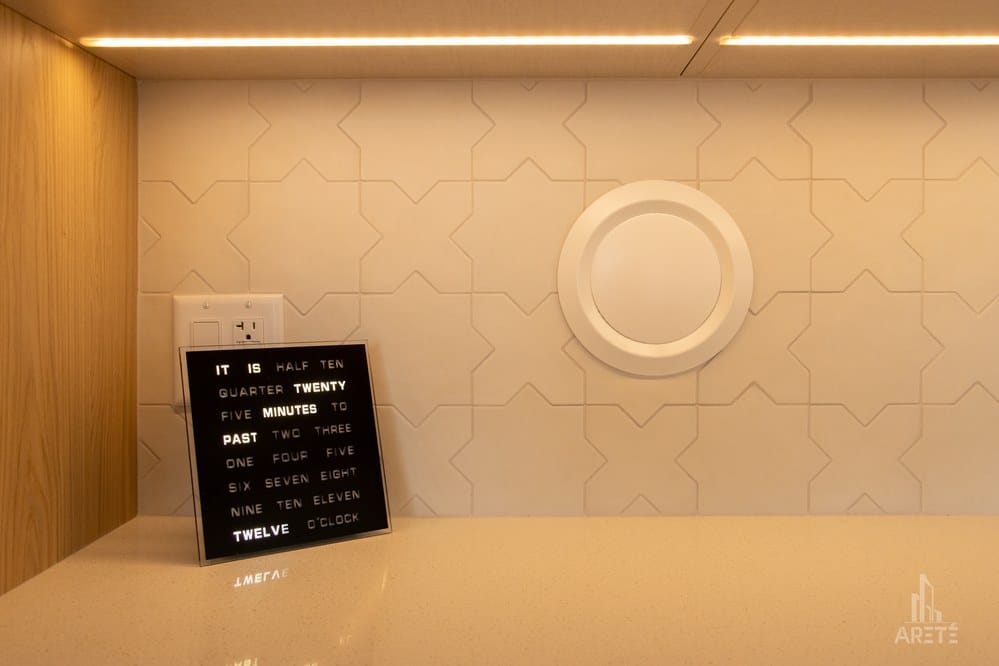
Kitchen lighting is one of the most searched renovation topics in Chicago and one of the least planned for. Most homeowners spend months choosing countertops, cabinet finishes, and appliances, then treat lighting as an afterthought. The result is a beautiful kitchen that is dim in the wrong places, harsh in others, and never quite feels finished.
In a Chicago condo or high-rise unit, the challenge is even more specific. You are working with a fixed footprint, have no natural light on some walls, and must run electrical lines that comply with your building’s requirements. Getting your lighting plan right from the start is not a cosmetic decision. It is a structural and functional one that affects every hour you spend in that kitchen.
At Areté Renovators, we plan lighting as part of every kitchen remodel we take on. Our designers will walk you through what we have learned works in Chicago condos and high-rise units.
Under-Cabinet Lighting Delivers the Most Return of Any Kitchen Upgrade
Under-cabinet lighting is the single highest-impact lighting addition in a kitchen remodel. It eliminates the shadow your own body casts when you stand at the counter, a problem overhead recessed lighting cannot solve on its own.
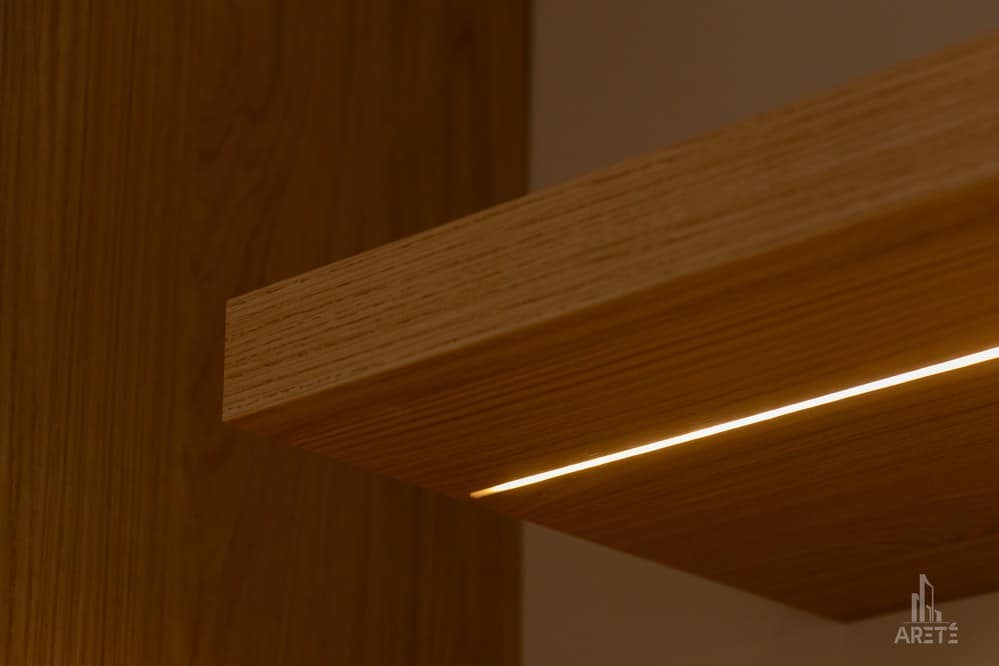
LED strip lights mounted to the underside of upper cabinets or the cabinet shelf above the counter wash your workspace in even, warm light. In our Lincoln Park renovations, we run continuous LED channel profiles the full length of the upper cabinet run. This gives a cleaner look than individual puck lights and distributes light without hot spots.
The practical result is that food prep, reading recipes, and working at the counter all become noticeably easier. In a condo kitchen where overhead natural light is limited, under-cabinet lighting is non-negotiable in our custom cabinetry design process.
Plan Recessed Ceiling Lighting Before Drywall Goes Up
Recessed ceiling lights, also called can lights or downlights, are the backbone of a well-lit kitchen. In Chicago high-rise units, we typically work with a concrete ceiling above the drywall layer, which means all electrical must be planned before the ceiling is closed. Moving a can light after the fact is a significant expense.
The standard mistake is placing cans in a grid pattern centered on the ceiling. This feels logical but often leaves the counters and the sink in shadow. We position recessed lights directly above work zones like the countertop run, the sink, and the range area rather than centering them for aesthetics.
For a typical Chicago condo kitchen, we use 4-inch trims in a warm white (2700K–3000K). Flush-mount ceiling lights can serve a similar purpose in kitchens where recessed installation is limited by building structure.
Pendant Lights Over an Island or Peninsula Create Visual Impact Without Bulk
If your kitchen has an island or peninsula, pendant lights are the most effective way to define that zone and add visual character. In a high-rise condo where the kitchen opens to the living area, pendants also help signal the kitchen boundary without a physical wall.
Scale matters here. A common error is choosing pendants that are too small. They read as afterthoughts rather than design decisions. As a general rule, the combined width of your pendant grouping should be roughly one-half to two-thirds the length of your island or peninsula.
In condo kitchens with lower ceilings (8–9 feet), a single elongated linear pendant is often a better choice than two or three individual pendants. It provides even light across the full workspace and takes up less visual weight.
Layer All Three Light Types for a Kitchen That Works at Every Hour
The kitchens that photograph well and function well share one thing. They have layered lighting. This means ambient light (recessed ceiling), task light (under-cabinet), and accent light (pendants, toe-kick LED, or interior cabinet lighting) working together.
- Ambient lighting handles general visibility.
- Task lighting targets the specific areas where you work.
- Accent lighting adds depth and warmth. It is what makes a kitchen feel finished at 7 PM with the overheads dimmed.
In our kitchen renovations across Lincoln Park, River North, and Gold Coast, we wire all three layers on separate circuits so each can be controlled independently. This is the single detail that most separates a well-planned lighting scheme from a basic one.
Put Every Circuit on a Dimmer Including the Under-Cabinet Lights
Dimmer switches are an inexpensive addition during a remodel that fundamentally changes how a kitchen feels at different times of day. A kitchen at full brightness for meal prep and the same kitchen at 30% for a dinner party are effectively two different rooms.
Not all LED strips and fixtures are dimmable by default. This needs to be confirmed at the fixture selection stage, not after installation. We always specify dimmable-compatible LED drivers and matching dimmers as part of the electrical plan.
Smart dimmers like Lutron Caseta and similar products add the option to set scenes and control lighting from your phone. In a high-rise with a connected building system, these also integrate cleanly with existing smart home setups.
Do Not Overlook the Sink and Range as Dedicated Lighting Zones
The sink and the range are the two most-used work zones in any kitchen, and both need dedicated overhead lighting, not just ambient coverage from the recessed grid.
Over the sink, a recessed light positioned directly above eliminates the shadow that falls on dishes and prep work. Over the range, the range hood itself often includes built-in task lighting. If yours does not, a dedicated recessed light above the range is the functional alternative.
In high-rise kitchens where a range hood vents internally, the hood design tends to be slimmer and the lighting built in. We factor this into our fixture selection so the hood light and the recessed lighting above work in the same color temperature.
FAQs About Kitchen Lighting in Chicago Condo Renovations
What color temperature is best for kitchen lighting?
We recommend 2700K–3000K (warm white) for most Chicago condo kitchens. It is warm enough to feel residential but bright enough for task work. Anything above 4000K tends to read as clinical in a home setting.
Can I add recessed lighting to a Chicago high-rise kitchen without a full remodel?
It depends on what is above the ceiling. In most concrete-and-drywall high-rise ceilings, adding recessed lights requires opening the ceiling to run conduit. This is typically done as part of a broader kitchen renovation. Surface-mount or semi-flush fixtures are a lower-intervention alternative if the ceiling cannot be opened.
How much does kitchen lighting add to a condo remodel budget?
A full three-layer lighting plan with recessed, under-cabinet, and pendant lights with dedicated dimmers typically adds $3,000–$6,000 to a kitchen remodel. This price depends on the number of fixtures and the complexity of the electrical work. In our experience, it is among the best-value additions relative to the visual and functional impact.
Call us at 773.683.3033 or contact us to talk through your kitchen lighting plan.