Why Thermally Broken Windows Are the Coolest Thing in Home Insulation
Why Thermally Broken Windows Are the Coolest Thing in Home Insulation
Why Your Windows Are Costing You More Than You Think
Thermally broken windows are window frames engineered with a non-conductive barrier inside the frame that stops heat from traveling between the inside and outside of your home.
Here’s the quick version of what you need to know:
- What they are: Window frames (usually aluminum or steel) with an insulating strip built in to block heat transfer
- Why they matter: Standard aluminum frames conduct heat freely — thermally broken frames can reduce that heat loss by up to 60%
- Key benefits: Lower energy bills, fewer drafts, less condensation, and better sound insulation
- Cost: Typically 25–40% more upfront than standard aluminum windows
- Lifespan: 30+ years with proper installation and maintenance
- Best for: Homes in climates with extreme heat or cold — like Chicago
If you’ve ever stood near a window on a freezing January night and felt a wave of cold air despite the glass being closed, you’ve experienced the problem firsthand. That chill isn’t just coming through the glass. It’s coming through the frame.
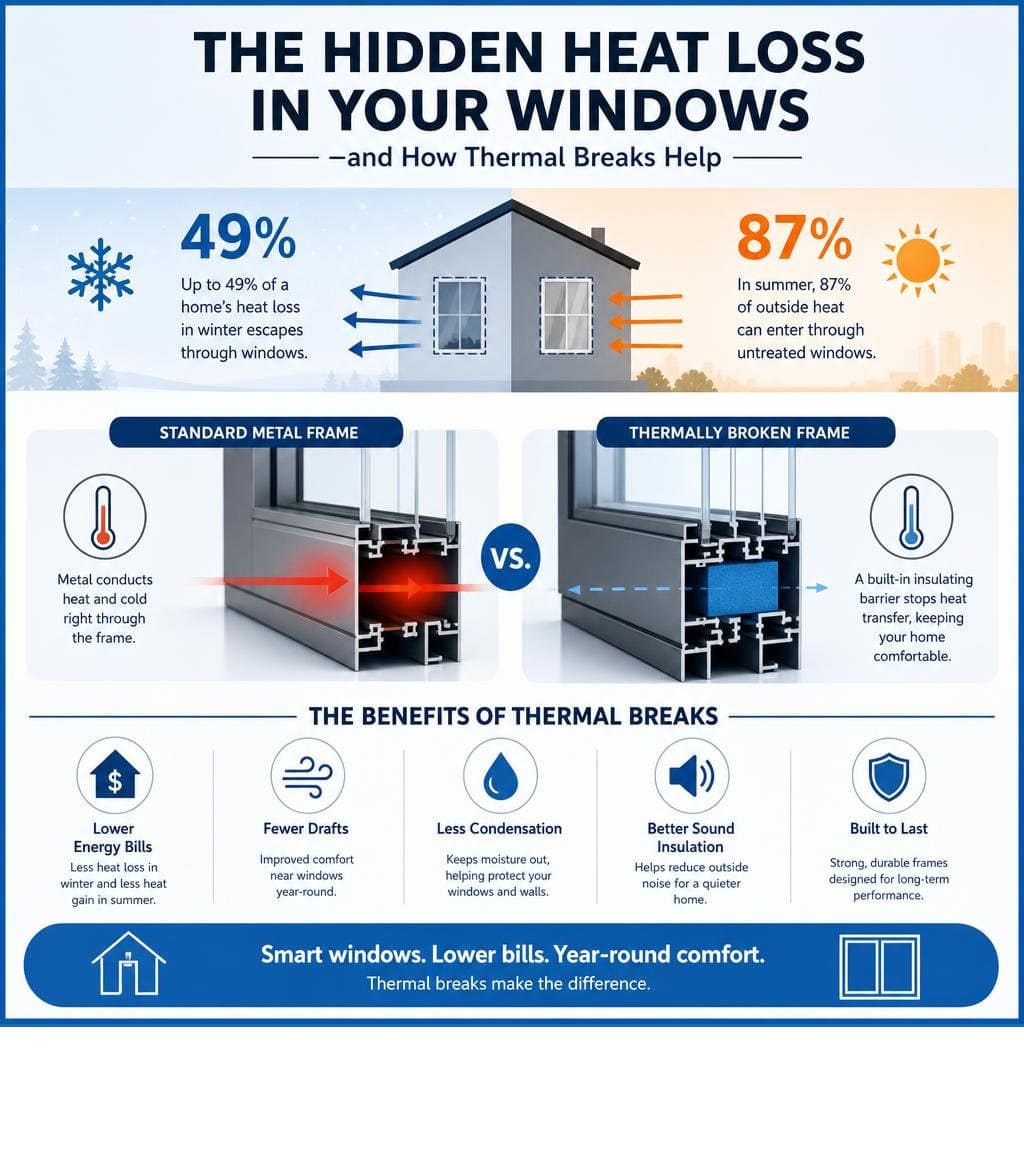
Up to 49% of a home’s heat loss in winter escapes through windows. In summer, 87% of outside heat can enter through untreated windows. Those aren’t small numbers — they show up directly on your energy bills every single month.
The good news? The fix is already built into modern window design. It’s called a thermal break, and it changes how the frame itself handles heat. The rest of this guide explains exactly how it works, what it costs, and whether it’s the right upgrade for your home renovation.
What Are Thermally Broken Windows and How Do They Work?
To understand how a thermally broken window works, we first have to look at the frame material itself. Metals like aluminum and steel are highly prized in modern home architecture. They are incredibly strong, durable, and allow for beautiful, ultra-slim profiles that maximize your glass area.
However, metals have a major physical flaw when it comes to insulation: they are highly conductive.
In the dead of a Chicago winter, a standard, non-thermally broken aluminum frame acts like a highway for heat. The warmth from your heating system is rapidly drawn into the interior frame, conducted through the metal to the exterior, and lost to the freezing outside air. In fact, a traditional aluminum window with standard glass allows about eight times as much energy to escape compared to an insulated wall of the same size.
This is where thermally broken windows come into play.
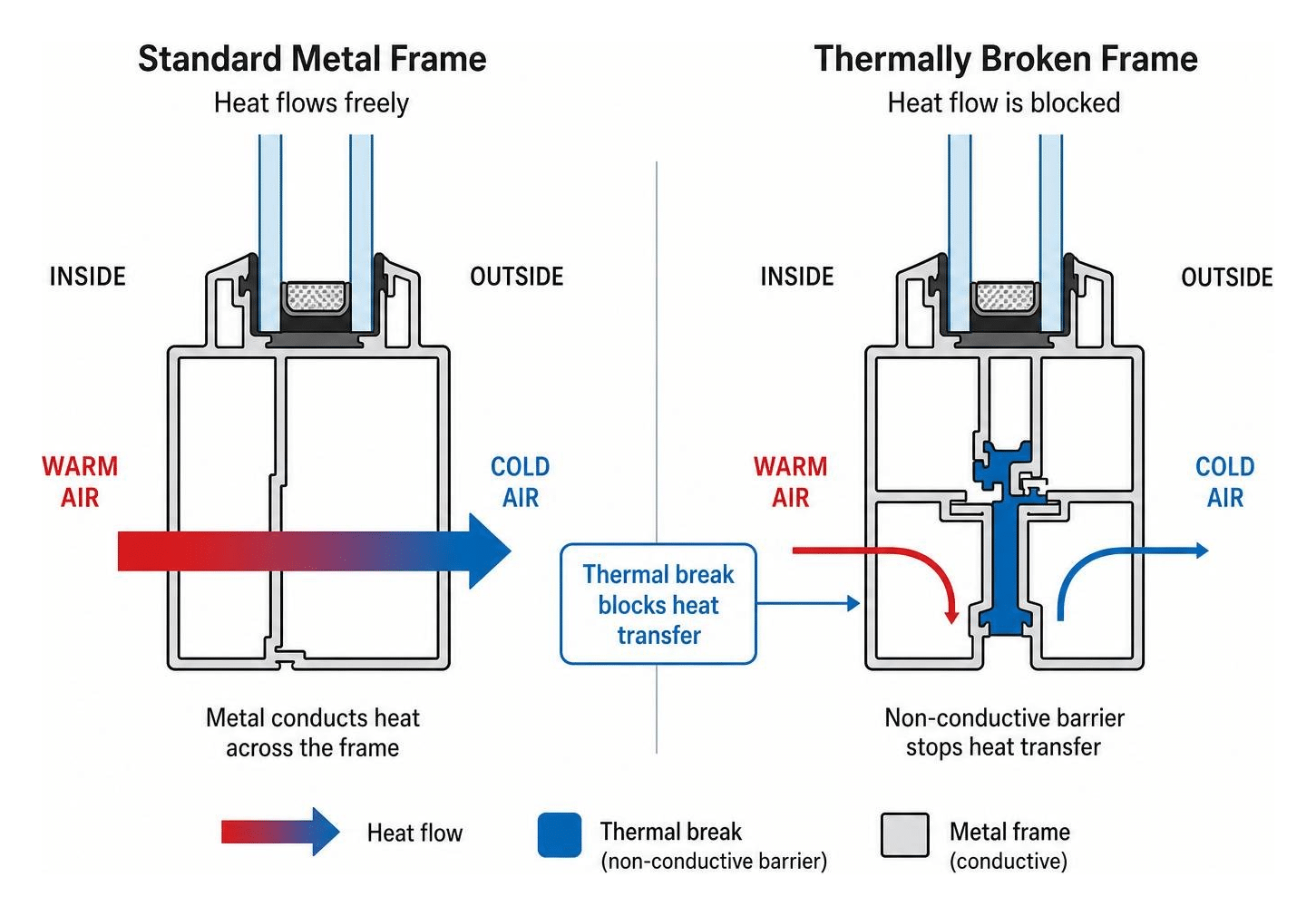
A “thermal break” is a physical barrier of low-conductivity material placed directly between the interior and exterior sections of the metal window frame. This barrier splits—or “breaks”—the continuous path of the metal. Because heat cannot easily pass through this insulating barrier, the transfer of temperature between the inside and outside of your home grind to a halt.
By interrupting this conductive pathway, the overall thermal performance of the window sky-rockets. We measure this thermal resistance using R-values (where a higher number means better insulation). Consider this comparison:
- A traditional aluminum window frame with double glazing typically has an R-value of just 0.26.
- A thermally broken window frame with double glazing can achieve an R-value of up to 0.8.
- When paired with triple glazing, a thermally broken frame can reach an impressive R-value of 1.0.
By addressing the frame’s conductivity, you ensure that the window frame is no longer the weakest link in your home’s thermal envelope.
The Science of Thermal Bridging
In building design, “thermal bridging” occurs when an object conducts heat significantly better than the surrounding materials, creating a path of least resistance for energy transfer. Uninsulated aluminum or steel window frames are classic thermal bridges.
When thermal bridging occurs in winter, it triggers a physical phenomenon known as a convective loop. Here is how it works:
- Warm indoor air comes into contact with the freezing cold surface of an uninsulated metal frame.
- The air rapidly transfers its heat energy to the cold metal, cools down, and becomes denser.
- This heavy, cold air sinks quickly to the floor.
- As it falls, it draws more warm indoor air toward the window to take its place, creating a continuous, circular draft.
Even if your thermostat is cranked up, these convective loops make your home feel drafty and force your HVAC system to run constantly to maintain a stable room temperature.
Materials Used to Create the Thermal Barrier
To successfully stop thermal bridging without sacrificing the structural strength of the window, manufacturers use advanced, high-density non-metal composites. The two primary materials used to create the thermal break are:
- Polyamide (Nylon) Strips: These are structural, glass-fiber-reinforced nylon extrusions. Polyamide is incredibly strong and has a thermal expansion rate very similar to aluminum, meaning the frame and the thermal break expand and contract at the same rate during extreme temperature swings. This prevents structural warping or seal failure over decades of seasonal changes.
- Polyurethane: In this method, a liquid polyurethane polymer is poured into a central channel in the aluminum extrusion. Once the polyurethane cures into a dense, solid barrier, the bottom of the metal channel is mechanically cut away (a process called “debridging”). This leaves the polyurethane as the sole structural and thermal link between the inner and outer frames.
Both materials act as exceptional thermal barriers, ensuring your metal windows maintain their structural integrity while delivering superior energy efficiency.
The Benefits of High-Performance Window Systems
Upgrading to thermally broken windows is one of the most impactful investments you can make for your home’s year-round comfort. While the energy savings are a major draw, the day-to-day lifestyle improvements are just as significant.
When we work with homeowners in areas like Evanston, Highland Park, and Irving Park, we emphasize that high-performance windows are a core component of a home’s exterior defense system. If you are preparing your property for the brutal winter months, combining window upgrades with other structural improvements is key. For a complete checklist, take a look at our guide on Steps to Winterize Your Chicago Home.
How Thermally Broken Windows Prevent Condensation and Drafts
One of the most frustrating issues with standard metal windows is interior condensation. On cold days, the interior surface of a non-broken aluminum frame can easily drop below the dew point of your indoor air. When warm, humid indoor air hits that freezing metal, it condenses into water droplets.
Over time, this moisture pools on your window sills, damaging drywall, peeling paint, and creating a breeding ground for toxic mold and mildew.
Because thermally broken windows feature an insulated core, the interior frame stays remarkably close to your home’s actual indoor temperature. If it is 70°F inside and 10°F outside, the interior surface of a thermally broken frame will remain warm to the touch. This completely eliminates the cold surface where condensation forms, keeping your indoor air healthier and protecting your home’s structure from water damage. Furthermore, by stopping the convective loops we discussed earlier, you eliminate those ghostly drafts that make your living spaces uncomfortable.
Acoustic Insulation and Sound Dampening
An unexpected but deeply appreciated benefit of thermal breaks is noise reduction. Sound travels through solid objects via vibrations. A continuous, solid metal window frame acts as an excellent conductor for street noise, sirens, and wind.
Because a thermally broken frame is physically split by a soft, dampening composite material (like polyamide or polyurethane), the pathway for sound waves is disrupted. When you combine a thermally broken frame with high-performance double or triple glazing, you create an exceptional acoustic barrier. This is a game-changer for homes in bustling urban neighborhoods like Lakeshore East or properties located near busy roads, turning your home into a quiet, peaceful retreat.
Comparing Frame Materials: Aluminum vs. Steel vs. Wood
Selecting the right frame material is a balance of aesthetics, structural needs, and maintenance preferences. Here is a quick look at how the three main options stack up:
| Feature | Thermally Broken Aluminum | Thermally Broken Steel | Traditional Wood |
|---|---|---|---|
| Thermal Efficiency | Excellent (with thermal break) | Very Good (with thermal break) | Naturally Excellent |
| Sightline Profile | Slim and modern | Ultra-slender and elegant | Thicker and traditional |
| Durability | High (corrosion-resistant) | Extremely High (structural powerhouse) | Moderate (prone to rot/warping) |
| Maintenance | Virtually zero | Low (requires quality finish) | High (needs painting/staining) |
| Upfront Cost | Moderate-High | Premium | High |
If you are evaluating options for a major property upgrade, windows are just one part of the equation. To see how window replacements fit into your broader home improvement plans, explore our list of the Top Exterior Upgrades for Chicago Homes.
Aluminum Frames and Modern Slim Profiles
Thermally broken aluminum is the gold standard for modern residential design. It offers incredible structural strength, allowing architects to design massive, floor-to-ceiling glass installations without requiring bulky frames.
Systems like the All Aluminum Thermally Broken Slim (LTS.87) allow homeowners to achieve clean, minimalist sightlines and panoramic views while maintaining stellar thermal efficiency. Aluminum is also highly resistant to the elements, meaning it won’t rust, warp, or crack under the intense freeze-thaw cycles of the Midwest.
Elegant and Durable Thermally Broken Steel
For homeowners seeking a timeless, high-end industrial look, steel is unmatched. Historically, steel windows were notoriously drafty and poor insulators. However, modern engineering has solved this.
By incorporating advanced thermal breaks into solid steel profiles, manufacturers like Thermally Broken Steel USA: Efficient Steel and Bronze Windows & Doors offer systems that satisfy both design perfectionists and energy-efficiency skeptics. Steel is incredibly dense and strong—capable of supporting massive, heavy triple-glazed panels with the thinnest possible profiles. It is a premium, luxury choice that elevates both the architectural appeal and the market value of historic or ultra-modern homes alike.
Cost, Lifespan, and Retrofitting Realities
Before diving into a window replacement project, it is essential to understand the financial and logistical realities of upgrading your home’s glazing systems.
When you are planning a comprehensive remodel, working with a team that understands the structural demands of window installations is critical. To learn more about our approach to exterior upgrades, visit our dedicated page on Windows and Doors.
Are Thermally Broken Windows Worth the Extra Cost?
There is no getting around it: thermally broken windows come with an upfront cost premium of 25% to 40% over standard, non-thermally broken aluminum or vinyl options.
However, looking at this strictly as an upfront expense misses the long-term return on investment (ROI). Because standard metal frames allow so much energy to escape, they force your heating and cooling systems to work overtime. By upgrading to thermally broken frames, you can cut window-related energy loss by up to 60%.
Over time, the substantial savings on your monthly gas and electric bills will directly offset the initial investment. Furthermore, because these windows reduce the load on your HVAC system, they extend the lifespan of your furnace and air conditioner. Add in the increased property resale value and the daily boost in physical comfort, and the investment easily pays for itself.
Can You Retrofit Existing Frames?
A common question we hear from homeowners in Chicago is whether they can simply retrofit their existing aluminum frames with a thermal break to save money.
Unfortunately, the answer is no.
A thermal break is not an aftermarket insert or a sealant that can be applied to an existing window. It is a fundamental structural component that must be integrated directly into the metal profiles during the manufacturing process at the factory. To get the benefits of a thermal break, a full window replacement is required. While a full replacement is a larger undertaking, it ensures that your new windows are perfectly sealed, structurally sound, and backed by comprehensive manufacturer warranties.
Frequently Asked Questions
Upgrading your home’s exterior is a major decision. To help you with the planning process, we’ve gathered answers to some of the most common questions homeowners ask when exploring Exterior Remodeling projects.
What is the typical lifespan of these window systems?
With professional installation and minimal maintenance, high-quality thermally broken window systems can easily last 30 years or more. Aluminum and steel frames are highly durable and do not suffer from the degradation, warping, or UV-brittleness that can plague standard vinyl frames over time.
Do they help reduce my carbon footprint?
Yes, significantly. Because space heating and cooling make up the bulk of residential energy consumption, reducing your HVAC load directly lowers your household’s carbon footprint. By keeping your heating and cooling inside where it belongs, you consume fewer fossil fuels and contribute to a more sustainable, energy-conscious community.
Are they recommended for Chicago’s extreme climate?
Absolutely. In fact, they are practically essential. The Chicago area experiences massive seasonal temperature swings—ranging from sub-zero winter winds to humid, 90°F summer days. Standard non-broken frames struggle immensely in these conditions, leading to heavy condensation, drafts, and high energy bills. Thermally broken frames are specifically engineered to handle these extreme thermal stresses, ensuring your home remains comfortable and protected year-round.
Areté: Your Chicago Exterior Remodeling Experts
Windows are much more than just a view to the outside world—they are a critical component of your home’s thermal defense, comfort, and architectural character. Upgrading to thermally broken windows ensures you no longer have to compromise between the modern, sleek aesthetic of metal frames and the high-performance energy efficiency your home deserves.
At Areté Renovators, we specialize in helping homeowners across Chicago, Evanston, Highland Park, and surrounding neighborhoods bring their remodeling visions to life. We understand that a home renovation can feel overwhelming, which is why we’ve built our business around a highly structured, client-focused process. From your initial design consultation to the final walkthrough, you will receive daily updates and work directly with a dedicated project coordinator who ensures every detail of your installation is executed flawlessly.
Ready to elevate the comfort, style, and efficiency of your home? Contact us to explore our specialized services for Windows and Doors, or call us today at 773.683.3033 to discuss your next renovation project!
