What Is the Most Durable Countertop?
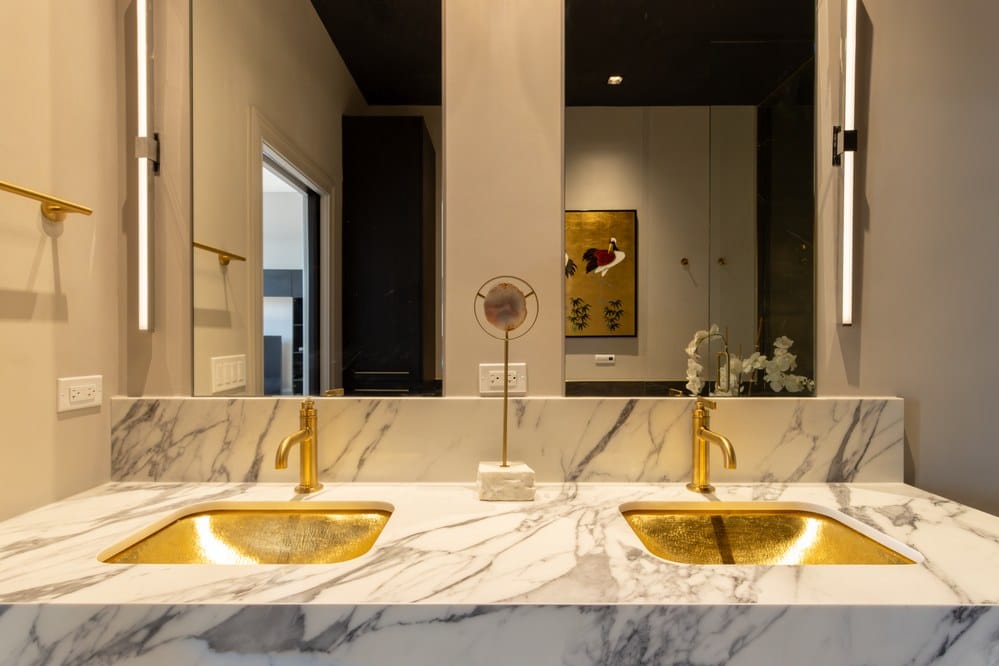
Choosing a countertop is one of the most permanent decisions in a kitchen or bathroom remodel. Unlike paint, hardware, or lighting, countertops are expensive to replace and structurally integrated into the space. Durability matters, not just in how a surface holds up to daily use, but how it performs in Chicago specifically. High-rise condos, older home construction, and fluctuating humidity all play a role in how materials age.
At Areté Renovators, we install countertops across kitchens and bathrooms throughout Chicago. Here is a straightforward breakdown of the most durable options, who each is right for, and what to avoid if longevity is your priority.
The Most Durable Countertop for Most Chicago Homes
Quartz is an engineered stone made of roughly 90 to 95 percent crushed natural quartz bound with resin. It is non-porous, does not require sealing, resists staining from wine, coffee, and cooking oils, and holds up to heavy daily use without chipping or cracking under normal conditions. For Chicago condo owners in particular, quartz handles humidity fluctuations better than more porous natural stones, making it the most practical, durable choice in a high-rise environment.
Quartz is also highly consistent in color and pattern. This consistency matters when you need slabs to match across a long countertop run or a waterfall edge. Brands like Silestone, Cambria, and Caesarstone offer surfaces that closely mimic Calacatta marble, Statuario, and quartzite at a fraction of the maintenance. For kitchen remodels where the surface takes the most abuse, quartz consistently delivers the best durability-to-maintenance ratio.
The one limitation is heat. The resin in quartz can discolor or crack under sudden extreme heat, so trivets and hot pads are necessary near the cooktop. For clients who cook heavily with cast iron or slide pots directly off the range, this is worth factoring into the decision.
Natural Stone Durability at the Premium Tier
Quartzite is a naturally occurring metamorphic rock formed when sandstone is subjected to extreme heat and pressure. It is harder than granite and significantly more durable than marble, with a Mohs hardness rating of 7 or higher. For clients who want the veined, organic look of natural stone without the fragility of marble, quartzite is the correct choice.
It does require sealing, typically once a year, depending on use. A properly sealed quartzite surface resists staining well and holds up to acidic foods, cleaning products, and heavy traffic better than marble or limestone. In Chicago’s luxury condo and high-end residential market, quartzite often earns back its premium on resale. Buyers in the $700,000 and up range respond to it in a way they do not respond to quartz, even when the quartz looks nearly identical.
Popular varieties include Taj Mahal, Calacatta Macaubas, and White Macaubas. Each has distinct veining and movement that cannot be replicated in engineered stone.
A Rising Option for High-Traffic Surfaces
Large-format porcelain slabs, sometimes marketed under names like Dekton or Neolith, are an increasingly popular choice for clients who want extreme durability with minimal maintenance. Porcelain is virtually impervious to heat, scratching, UV fading, and moisture. It does not require sealing and will not stain under normal conditions.
The tradeoff is that porcelain is brittle at the edges and corners. A sharp impact, like a cast iron pan dropped corner-first, can chip the edge in a way that quartz or stone would withstand. Installation also requires experienced fabricators because the slabs are unforgiving to cut and handle. When installed correctly by a skilled team, porcelain slabs are among the most durable surfaces available for Chicago kitchen remodels and outdoor kitchen applications.
Still a Strong Performer
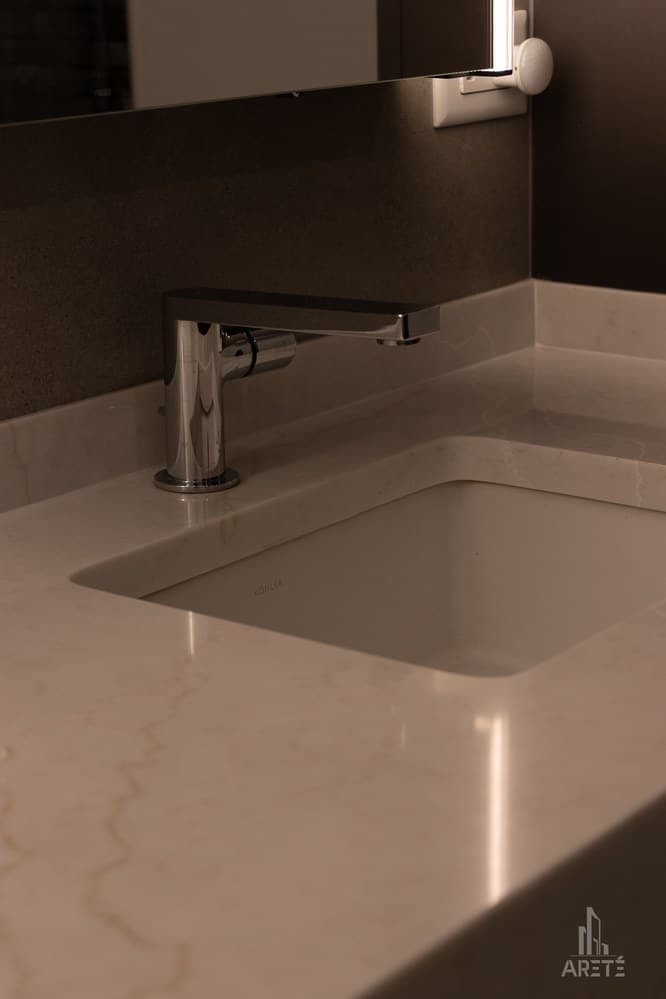
Granite fell out of fashion in the early 2010s when quartz became dominant, but it remains one of the most durable natural stone countertop options available. It is heat resistant, scratch resistant, and, when properly sealed, resists staining reasonably well. For clients who want a natural stone at a lower price point than quartzite, a high-quality granite with tight, consistent patterning is a legitimate choice.
The main drawback is the maintenance requirement. Granite is porous and requires sealing once or twice a year. An unsealed or improperly sealed granite surface will absorb oils, wine, and acidic liquids over time. It is also heavy, which matters in high-rise condos where structural load capacity affects what materials are practical.
What to Avoid If Durability Is Your Priority
Marble is beautiful and consistently in demand, but it is not a durable countertop by any practical measure. It is soft, porous, and etches from acids like lemon juice, vinegar, and many common cleaning products. The etching appears as dull spots on the polished surface and requires professional refinishing. Marble belongs in low-traffic bathrooms and powder rooms where it is used occasionally and cleaned carefully. It does not belong in a kitchen used daily if durability is the goal.
Laminate and solid surface materials like Corian have improved significantly in recent years. They still cannot compete with stone or engineered stone in durability or resale value in Chicago’s mid-to-upper market. They have a place in budget renovations, but if you are investing in a full bathroom or kitchen remodel, the countertop is not the place to cut costs.
FAQs About Durable Countertops in Chicago
- What is the most low-maintenance countertop? Quartz requires the least maintenance of any popular countertop material. It does not need sealing, resists staining, and cleans easily with soap and water. For busy Chicago homeowners, it is the most practical long-term choice.
- Is quartzite worth the extra cost over quartz? In Chicago’s luxury market, yes. Quartzite provides a natural stone look and feel that engineered quartz cannot fully replicate. It holds up better than marble while requiring less maintenance. For high-end condos and primary bathrooms, it often earns back its premium on resale.
- Can I put marble in my Chicago kitchen? Marble is not recommended for kitchen countertops if durability is a priority. It etches and stains easily and requires significant ongoing maintenance. For a kitchen that gets daily use, quartz or quartzite will perform far better over time.
Selecting the Perfect Flooring for Your Chicago Home
Our design-build team possesses the expertise to help you find the countertop material that perfectly suits your space, lifestyle, and budget. We will walk you through all the options for your Chicago home. Call us at 773.683.3033 or contact us to discuss the ideal countertop choices for your kitchen or bathroom remodel.
We offer two convenient Chicago locations:
155 N Harbor Dr, Unit 1C8A-W
Chicago, IL 60601
3821 W Montrose Avenue
Chicago, IL 60618