What Does a Kitchen Remodel Actually Cost in Chicago in 2026?
Planning a kitchen remodel in Chicago is exciting. It’s also one of the most significant financial decisions you’ll make as a homeowner. Material selections, labor rates, structural conditions, building permits, it all adds up quickly, and the final number often surprises people who haven’t done this before.
Our designers and project managers work with Chicago homeowners every day, and the first question we almost always hear is the same: “What’s this really going to cost?” This post breaks down honest, current cost ranges for mid-range and upscale Chicago kitchen remodels, explains what drives those numbers locally, and helps you build a realistic budget from the start.
What Chicago Homeowners Are Actually Spending
Chicago kitchen remodel costs vary significantly based on scope, materials, and the specific conditions of your home. As a general reference point, the 2025 Cost vs. Value Report from the Journal of Light Construction places a major midrange kitchen remodel in the Chicago area at approximately $84,237, while an upscale kitchen remodel averages around $161,499. Those figures reflect complete gut renovations with full replacement of all surfaces, cabinets, and appliances.
At Areté, we organize kitchen projects into three tiers that reflect how most clients approach the decision.
- Basic Kitchen Remodel — Starting around $75,000. New semi-stock cabinetry, solid-surface or entry-level quartz countertops, updated lighting, and mid-tier appliances. Layout stays largely the same. This tier refreshes a kitchen substantially without major structural work.
- Semi-Custom Remodel — Starting around $85,000. Semi-custom cabinetry with specialty storage features, upgraded quartz or natural stone countertops, a designer backsplash, better appliances, and some layout refinements. This is where function and personalization start to come together.
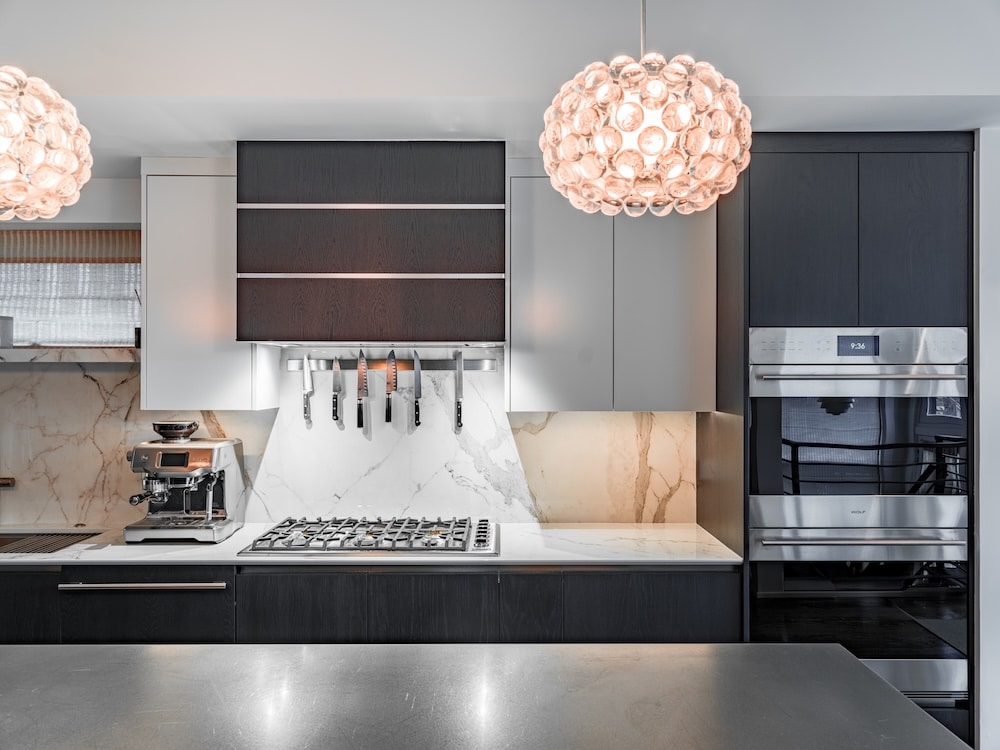
- Custom Remodel — $135,000 and up. Full custom cabinetry, premium stone surfaces, professional-grade appliance packages, structural changes, and finishes selected specifically for your space. Projects at this level are designed from the ground up around how you actually live and cook.
Mid-Range Kitchen Remodel Cost Breakdown
A mid-range kitchen remodel in Chicago typically involves replacing most surfaces and fixtures while keeping the existing footprint. Here’s where the budget generally goes.
- Cabinetry: Cabinets are the single largest line item in any kitchen remodel, often representing 35%–40% of the total project cost. Semi-custom options offer more flexibility in sizing and finish than stock cabinets, without the full lead time of completely custom work. Expect to spend between $150 and $650 per linear foot at this tier.
- Countertops: Quartz remains the most popular choice for mid-range projects. Material and installation typically run $50–$150 per square foot, and the average kitchen countertop covers roughly 35 square feet.
- Appliances: A quality mid-range appliance package generally falls between $5,000 and $12,000, depending on brand and whether you’re replacing everything at once.
- Flooring: Hardwood and luxury vinyl plank are common choices at this tier. Costs range from $5–$20 per square foot installed, depending on the material.
- Plumbing and Electrical: Even when keeping the same layout, updated circuits, GFCI outlets, new fixtures, and appliance connections are standard. Budget $3,000–$8,000 for these trades on a mid-range project.
- Backsplash and Lighting: Together, these typically add $2,000–$5,000 depending on tile selection and fixture choices.
- Permits: Chicago kitchen remodeling permits run $1,800–$4,200 depending on project scope, according to Wood Contracting’s 2026 guide on Chicago building requirements. If separate electrical and plumbing permits are required, the total permit cost can reach $2,500–$5,000.
Upscale Kitchen Remodel Cost Breakdown
Upscale remodels involve full custom cabinetry, premium surface materials, structural modifications, and professional-grade appliances. Several factors push costs into the $135,000–$200,000+ range in Chicago.
- Custom Cabinetry: Fully custom cabinets are designed and built to exact specifications. At $500–$1,200 per linear foot, a typical Chicago kitchen with 20–25 linear feet of cabinetry can reach $10,000–$30,000 for cabinets alone.
- Premium Countertops: Marble, quartzite, and high-end quartz run $60–$200 per square foot. Statement island tops in book-matched marble can push well beyond that.
- Professional-Grade Appliances: Brands like Thermador, Sub-Zero, and Wolf drive appliance costs to $20,000–$40,000 or more for a complete package. Built-in refrigerators, double steam ovens, and integrated dishwashers each add to that total.
- Structural Changes: Removing walls, opening sightlines, expanding the kitchen footprint, or relocating plumbing stacks significantly increases both labor and material costs. Structural modifications alone can add $10,000–$30,000 depending on what’s involved.
- Design and Architecture Fees: At the upscale level, design fees typically range from $2,750–$6,000 for a kitchen project. At Areté, design and construction are integrated from the start, which keeps communication tight and reduces costly surprises during construction.
What Makes Chicago Projects More Expensive
A few local factors consistently push Chicago kitchen costs above national averages.
Labor rates. According to the U.S. Bureau of Labor Statistics (May 2024 data), Chicago-area tradespeople earn significantly above the national median. Plumbers in the metro area earn a median hourly wage of $48.20, electricians $43.95, and carpenters $33.40. Labor typically accounts for 50%–60% of total project costs, so these rates have a real impact on your final number.
Condo and high-rise requirements. HOA or condo association approvals add 4–8 weeks to project timelines before city permits can even be applied for. Association application fees run $350–$850, and some buildings require engineering reviews for any work touching plumbing stacks or structural systems. Sound transmission requirements in multi-family buildings can also require specialized materials or construction techniques.
Historic district considerations. Properties in neighborhoods like Lincoln Park may fall within Chicago’s historic district review zones. Exterior modifications, window changes, or any alteration visible from public streets requires Commission on Chicago Landmarks approval before a building permit can be issued. This process adds 6–10 weeks and requires careful documentation of materials and design intent.
Seasonal timing. Chicago’s construction season creates demand spikes in spring and early summer. Contractors’ schedules fill quickly, and material lead times extend. Starting the planning and design process in the fall or winter gives you better access to trade partners and more scheduling flexibility.
ROI on Chicago Kitchen Remodels
Return on investment is a common concern, and it’s worth having realistic expectations. According to the 2025 Cost vs. Value Report for Chicago specifically:
- A minor midrange kitchen remodel (updating surfaces and fixtures without structural changes, approximately $27,187 in job cost) recoups about 4% at resale in Chicago.
- A major midrange kitchen remodel (complete gut renovation with new cabinets, countertops, appliances, and flooring, approximately $84,237) recoups approximately 2% at resale.
- A major upscale kitchen remodel (approximately $161,499) recoups around 6% at resale.
These numbers reflect resale value calculations and don’t capture the daily livability improvements that come from a well-designed kitchen. For homeowners planning to stay in their home for 10 or more years, the ROI conversation shifts considerably. The value of a kitchen you love using every day is real, even when it doesn’t show up in a resale calculation.
The strongest financial case for larger investments is made when the project is designed thoughtfully. Over-building relative to the neighborhood rarely pays off. Areté’s team helps clients find the right balance, so your investment makes sense for your home, your neighborhood, and your goals.
How to Budget Smarter
A few principles that consistently protect clients from budget overruns:
Build in a contingency fund. Set aside 10%–15% of your total budget for unexpected conditions. Older Chicago homes regularly reveal hidden water damage, undersized electrical panels, or outdated plumbing once walls come down. Finding these issues is actually a good thing because it means they get addressed properly, but they need to be in your budget.
Finalize selections before construction begins. Change orders are one of the most common sources of cost increases. Locking in cabinetry, tile, countertops, appliances, and fixtures during the design phase prevents expensive revisions mid-project.
Prioritize the layout first. Structural changes and plumbing relocations are the most expensive items on any scope of work. If your current layout functions reasonably well, working within it, while still transforming the aesthetics and finishes, delivers a better result for the investment.
Work with licensed contractors. Illinois law requires licensing for work over $1,000. Beyond legal compliance, licensed contractors pull permits properly, coordinate inspections, and carry the insurance coverage that protects you if something goes wrong. The cost difference between a licensed and unlicensed contractor is rarely worth the risk.
Start Your Chicago Kitchen Remodel with Areté
A well-executed kitchen remodel is one of the most satisfying investments you can make in your home. The difference between a project that delivers and one that disappoints almost always comes down to planning, communication, and having the right team in place from the beginning.
Our design-build process gives Chicago homeowners a single, integrated team from concept through completion with transparent budgeting, coordinated trades, and a finished kitchen that reflects how you actually live. Call us at 773.683.3033 or contact us to start planning your Chicago kitchen remodel today.