The Ergonomic Case for Deep Drawers in Your Kitchen
Kitchen design in Chicago is about more than just aesthetics. While sleek countertops and modern appliances catch the eye, the true test of a kitchen’s success lies in how well it functions for the people who use it every day. Ergonomics, the study of people’s efficiency in their working environment, plays a pivotal role in creating spaces that are comfortable, safe, and easy to use.
For decades, the standard kitchen layout relied heavily on lower cabinets with doors and shelves. This traditional approach often forces homeowners to bend, kneel, and rummage through dark recesses to find pots, pans, and dry goods. As we age or simply seek more convenience in our busy lives, these physical demands become less desirable.
Our Chicago kitchen design professionals can show you how a shift is occurring in modern kitchen design. We are moving away from the standard lower cabinet and embracing deep, heavy-duty drawer systems. This evolution prioritizes accessibility and comfort without sacrificing style, ensuring your kitchen remains a joy to use for years to come.
The Problem with Traditional Lower Cabinets
We have all been there. You are in the middle of cooking a complex meal, and you need that one specific roasting pan. You know it is somewhere in the back of the bottom cabinet. You have to stop what you are doing, crouch down on the floor, and start shifting stacks of baking sheets and mixing bowls just to reach it.
This scenario highlights the primary ergonomic flaw of traditional lower cabinets. They require you to adapt your body to the storage, rather than the storage adapting to you.
The physical toll of these repeated movements adds up. Constant bending and kneeling can put unnecessary strain on your back, knees, and hips. For those with mobility issues or chronic pain, accessing lower cabinets can be a daily struggle. Even for the fittest individuals, searching for items in the dark depths of a cabinet is an inefficient and often frustrating experience.
Furthermore, lower cabinets often lead to “lost” items. When things get pushed to the back, they are easily forgotten. You might find yourself buying duplicates of ingredients or tools simply because you couldn’t see the ones you already owned buried behind the front row of items.
The Rise of Deep Drawer Systems
To combat the inefficiencies of standard cabinetry, deep drawer systems have emerged as a superior ergonomic alternative. These are not the shallow drawers used for silverware and junk. These are robust, full-extension drawers designed to hold heavy cookware, stacks of plates, and pantry staples.
The fundamental difference lies in visibility and motion. With a drawer, you pull the storage out to meet you. In one smooth motion, the entire contents of the cabinet are revealed. You can look down and see everything at a glance, from the items in the very front to those all the way in the back.
This shift transforms the way you interact with your kitchen. It turns storage from a hiding place into an organized, accessible system.
Benefits of Ergonomic Cabinetry
Transitioning to deep drawer systems offers a multitude of advantages that go beyond simple convenience. It creates a kitchen environment that supports your physical well-being and enhances your daily routine.
Improved Accessibility
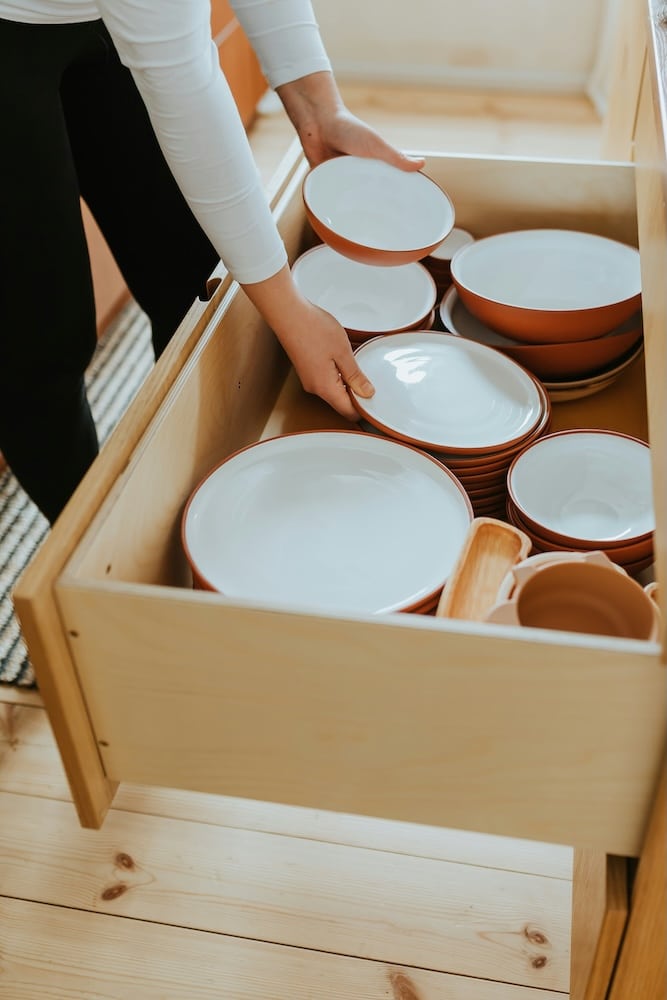
The most immediate benefit is the elimination of the “bend and reach.” With deep drawers, you can access heavy items like cast-iron skillets or stand mixers from a standing position. You simply pull the drawer open and lift the item out using proper lifting mechanics, rather than awkwardly twisting and pulling from a crouched position. This is particularly beneficial for aging-in-place design, ensuring your home remains functional and safe through all stages of life.
Enhanced Organization
Deep drawers provide a structured environment for your kitchen essentials. Unlike the open void of a cabinet shelf, drawers can be customized with a variety of accessories:
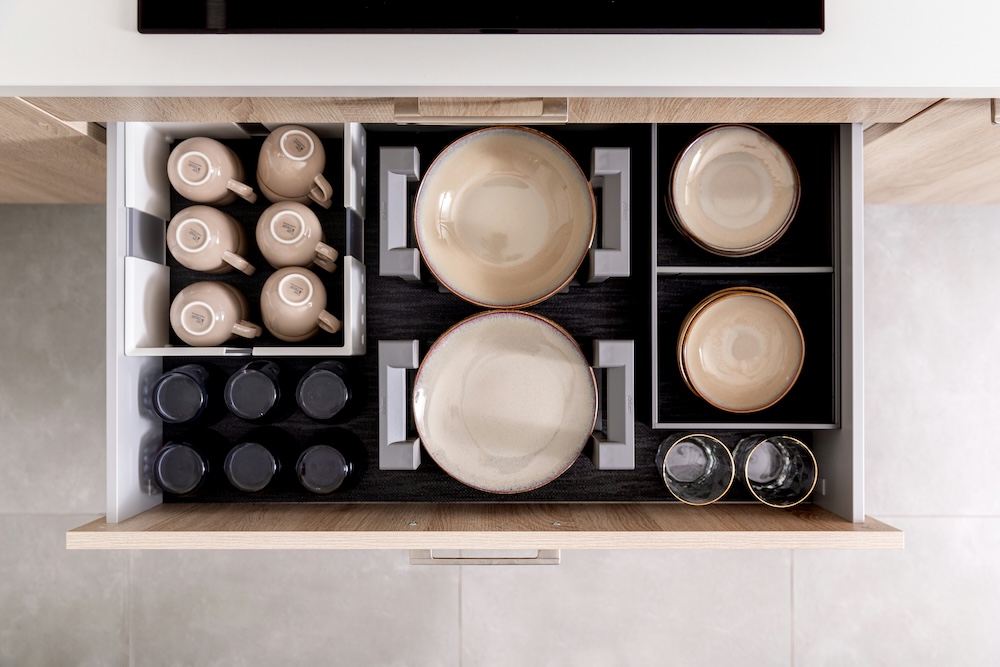
- Peg systems keep plates and bowls securely in place, preventing them from sliding when the drawer opens and closes.
- Adjustable dividers allow you to create specific zones for lids, Tupperware, or baking sheets.
- Internal organizers can separate dry goods, keeping snacks and ingredients visible and upright.
This level of organization means less clutter and less time spent searching for what you need. Everything has a designated home that is easy to see and easy to reach.
Increased Storage Capacity
It is a common misconception that drawers offer less storage space than cabinets. In reality, deep drawers often utilize the available space much more efficiently. In a standard cabinet, the top portion of the shelf space often goes unused because you cannot stack items too high without making them impossible to retrieve.
Deep drawers utilize the full height and depth of the cabinet box. You can stack pots and pans effectively or store tall items like cereal boxes and oil bottles upright. Because the drawer extends fully, you are using every square inch of the cabinet depth, not just the front half.
Reduced Strain and Discomfort
By bringing the contents of your cabinets to you, deep drawer systems significantly reduce physical strain. There is less twisting of the torso and less pressure on the knees. This ergonomic approach helps prevent the micro-injuries and daily fatigue associated with poor kitchen mechanics. A kitchen designed with these principles in mind is one where you can cook, clean, and entertain with greater ease and comfort.
Design Considerations for Deep Drawers
When planning a renovation that incorporates ergonomic cabinetry, there are several factors our designers will walk you through to ensure the best results for your specific needs.
- Weight Capacity: Not all drawer slides are created equal. For drawers intended to hold heavy items like crockery or canned goods, it is crucial to use heavy-duty hardware rated for significant weight. This ensures the drawers operate smoothly and safely over time.
- Drawer Sizing: A mix of drawer depths is usually ideal. Very deep drawers are perfect for large appliances and pots, while slightly shallower drawers work well for linens, pantry items, or everyday dishes. We customize these dimensions based on exactly what you plan to store.
- Placement: Think about your workflow. Deep drawers for pots and pans should be located near the range. Drawers for dishes should be near the dishwasher or dining area. Strategic placement minimizes the distance you have to carry heavy items.
- Handle Design: Even the hardware you choose impacts ergonomics. Large, easy-to-grip pulls are generally more comfortable to use on heavy drawers than small knobs, allowing you to use your whole hand to open the drawer rather than just your fingertips.
Creating a Kitchen That Works for You
Investing in ergonomic cabinetry is an investment in your long-term quality of life. By shifting from traditional lower cabinets to deep, heavy-duty drawer systems, you create a space that is efficient, organized, and kind to your body. It is a subtle change that makes a profound difference in how you experience your home every single day.
If you are ready to explore how ergonomic design can transform your kitchen into a modern masterpiece, we are here to help. Call us at 773.683.3033 or contact us today to discuss your vision.