Maximizing Your Investment with Smart Home Renovation Tax Write-Offs
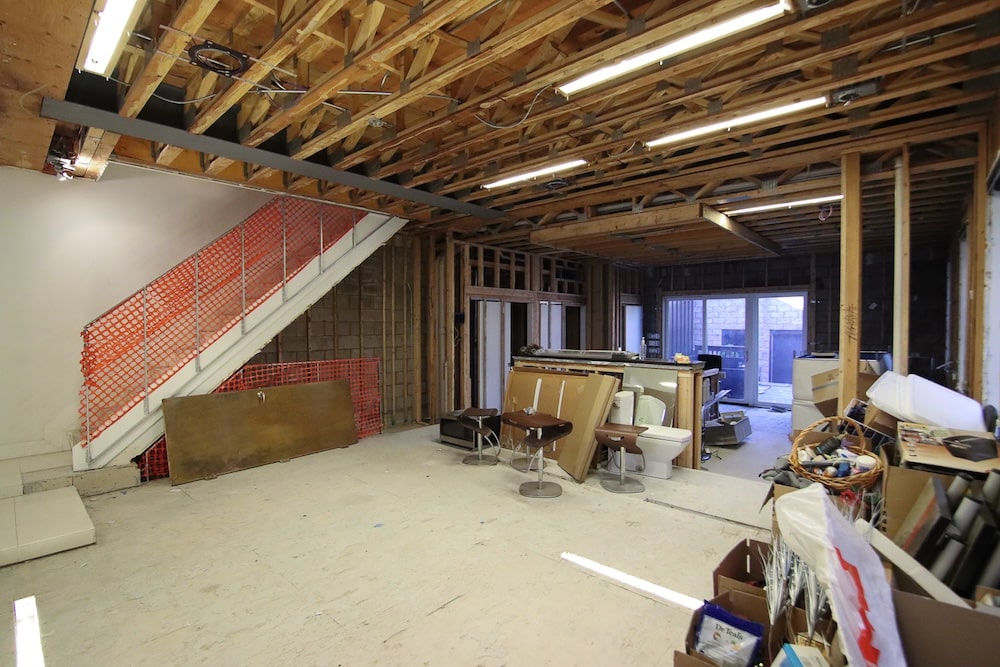
Renovating your home in the Gold Coast or Lincoln Park is more than just an aesthetic upgrade. It is an investment in your lifestyle and your property’s long-term value. The primary goal of a remodeling project is often to create a space that feels uniquely yours. Researching the potential tax implications can add another layer of value to your decision-making process.
The world of tax deductions for home improvements can be convoluted. Our team at Areté Renovators frequently works with clients who want to understand how their vision for a modern, sleek kitchen or a functional home office might impact their tax returns. While general home renovations are typically nondeductible personal expenses, there are specific scenarios where improvements can lead to tax savings.
Our professionals can help you identify opportunities where design meets financial prudence. From energy-efficient upgrades to medically necessary modifications, certain projects may qualify for deductions or credits. We always recommend consulting with a qualified tax professional to understand your specific situation, but knowing what to look for is an excellent place to start.
Disclaimer: This article is for informational purposes only and does not constitute financial or legal advice. Tax laws are complex and subject to change. Please consult with a certified tax professional or CPA to discuss your specific situation and eligibility for any deductions or credits.
Differentiating Between Repairs and Capital Improvements
When considering the tax implications of work done on your home, the IRS draws a distinct line between repairs and capital improvements. Understanding this difference is crucial for accurate record-keeping and potential tax benefits when you eventually sell your home.
Repairs are generally defined as work that keeps your home in good operating condition but does not necessarily add significant value or prolong its life. Examples might include:
- Painting a room
- Fixing a leaky faucet
- Replacing a broken window pane
- Patching a roof leak
These expenses are typically not deductible for a personal residence. They are considered part of regular home maintenance.
Capital Improvements, on the other hand, are renovations that add value to your home, prolong its useful life, or adapt it to new uses. These improvements are significant because they add to your home’s “tax basis.” Your tax basis is essentially the amount you have invested in the home. When you sell your property, a higher tax basis can reduce the amount of profit subject to capital gains tax.
Examples of capital improvements that Areté Renovators specializes in include:
- Building a home addition
- Finishing a basement
- Installing a new HVAC system
- Replacing the entire roof
- Complete kitchen or bathroom remodels
By meticulously tracking these capital improvements, you are effectively reducing the taxable gain when it comes time to sell. Our project managers ensure you have detailed documentation of the scope and cost of these substantial upgrades.
Energy-Efficient Upgrades and Federal Tax Credits
Sustainability is a growing priority for many of our Chicago clients, and the federal government offers incentives to encourage eco-friendly home improvements. The Inflation Reduction Act has expanded several credits that can make high-efficiency upgrades more attractive.
You may be eligible for the Energy Efficient Home Improvement Credit for qualified renovations. This credit allows you to claim a percentage of the costs for specific upgrades on your tax return.
Eligible improvements often include:
- Exterior Doors and Windows: Installing energy-efficient windows and skylights can reduce energy bills and may qualify for credits.
- Insulation: Upgrading insulation materials to meet specific energy standards.
- HVAC Systems: Installing highly efficient central air conditioners, water heaters, and furnaces.
There is also the Residential Clean Energy Credit, which offers substantial savings for installing renewable energy systems. This might include:
- Solar electric panels
- Solar water heaters
- Geothermal heat pumps
- Battery storage technology
Integrating these technologies requires careful planning to ensure they blend seamlessly with your home’s design. Our designers can walk you through options that respect your home’s aesthetic while maximizing energy efficiency.
Medical Necessity Renovations
For homeowners who need to modify their living space due to medical reasons, the IRS offers potential deductions under the medical expense deduction. These improvements must be made primarily to accommodate a medical condition for you, your spouse, or a dependent.
Common examples of medically necessary renovations include:
- Widening doorways and hallways for wheelchair access
- Installing ramps or lifts
- Modifying stairways
- Adding handrails and grab bars in bathrooms
- Lowering cabinets or modifying kitchen layouts for accessibility
If a renovation increases the value of your property, the deduction is limited to the difference between the cost of the improvement and the increase in the home’s value. However, certain improvements solely for accessibility do not usually increase home value in the eyes of the IRS and may be fully deductible as medical expenses.
Our team has experience creating accessible spaces that remain stylish and luxurious. We believe that functional necessity should never compromise design excellence.
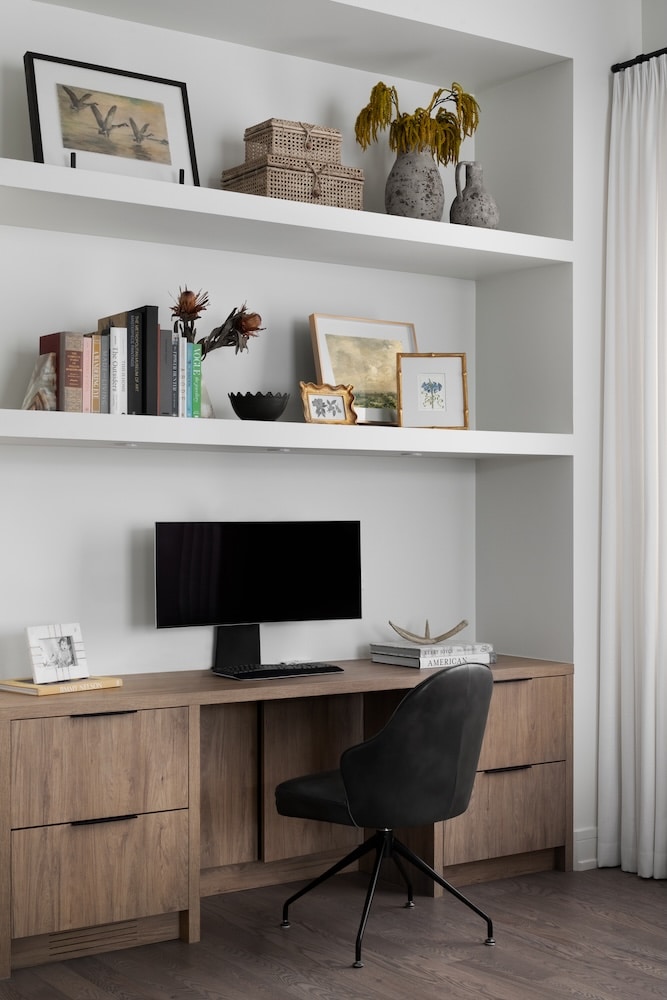
Home Office Improvements for the Self-Employed
With the rise of remote work, many of our clients in Lakeview and Lincoln Park are business owners or independent contractors working from home. If you use a portion of your home exclusively and regularly for business purposes, you may be able to deduct expenses related to that space.
Renovating a dedicated home office can offer immediate tax benefits. If you qualify for the home office deduction, you may be able to write off 100% of the direct costs associated with renovating that specific room.
Direct expenses could include:
- Painting the office
- Installing built-in shelving or cabinetry in the office
- Repairs specific to the office space
Indirect expenses, such as improvements to the home’s heating or electrical systems that benefit the entire house, may be partially deductible based on the percentage of your home used for business.
Creating a productive and inspiring workspace is one of our specialties. We can help you design a custom office that meets your professional needs while adhering to the “exclusive use” requirement.
Chicago-Specific Historical Preservation Incentives
Chicago is renowned for its architecture, and many of our clients live in historic properties. If you are renovating a certified historic structure, you might be eligible for incentives aimed at preservation.
The State of Illinois and sometimes federal programs offer tax credits for the rehabilitation of historic homes. These programs often require that the renovation work meets specific standards to preserve the historic character of the building.
- Illinois Historic Preservation Tax Credit Program: This program can provide a state income tax credit to owners of historic residences who undertake a certified rehabilitation.
- Property Tax Assessment Freeze: Illinois offers a program that can freeze the assessed value of owner-occupied historic residences for a period of time after a substantial rehabilitation, potentially saving thousands in property taxes
Our experts are familiar with the unique challenges and opportunities of renovating Chicago’s historic homes. We can guide you through the process of updating your home for modern living while respecting its architectural heritage.
Documentation and Record-Keeping
To take advantage of any of these tax benefits, impeccable record-keeping is non-negotiable. The IRS requires proof of your expenses.
Our project management process at Areté Renovators includes transparent budgeting and documentation, but you should also maintain your own personal files.
We recommend keeping a dedicated file for your home renovation that includes:
- Contracts with clear descriptions of the work performed
- Invoices and receipts for all materials and labor
- Proof of payment (cancelled checks, credit card statements)
- Before and after photos of the project
Organizing your records simplifies tax filing and ensures you have the necessary documentation for audits or when selling your home.
To streamline your renovation process, we provide all clients with access to a personalized Buildertrend account. This platform centralizes all project details, including contracts, invoices, progress updates, and communication, in one easy-to-access hub.
With Buildertrend, you can monitor the timeline, review payment schedules, and stay updated on every phase of your home renovation. This ensures transparency and simplifies project management, giving you peace of mind throughout the process.
Final Tips for Maximizing Value
Renovating your home is a significant financial commitment. By strategically planning your project, you can enhance your daily life and optimize your financial position.
- Consult Early: Speak with your tax advisor before starting a major project to understand current laws and eligibility.
- Focus on ROI: Prioritize improvements that historically offer high returns on investment, such as kitchen and bathroom remodels.
- Keep the Long View: Remember that capital improvements reduce your capital gains tax in the future, even if they don’t offer an immediate deduction today.
Our team is dedicated to helping you achieve a renovation that is both beautiful and a wise investment.
Call us at 773.683.3033 or contact us to discuss how we can transform your home into a modern masterpiece.