Don’t Down the Drain: A Guide to Bathroom Addition Costs
Don’t Down the Drain: A Guide to Bathroom Addition Costs
How Much Does Adding a New Bathroom Cost in 2026?
The adding new bathroom cost typically falls between $21,000 and $49,000, though the full range runs from as low as $5,000 for a simple conversion to over $75,000 for a high-end build.
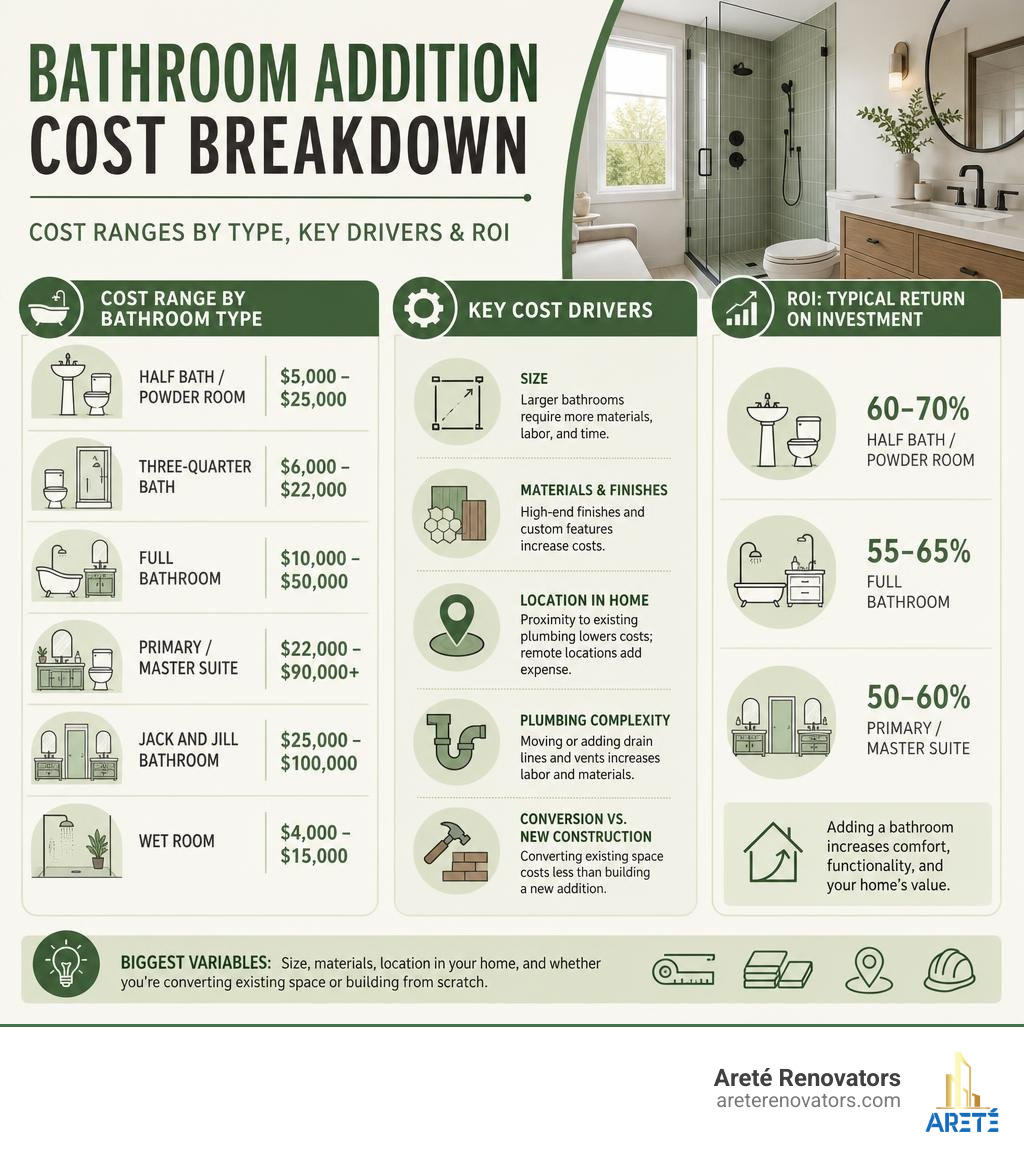
Here’s a quick snapshot by bathroom type:
| Bathroom Type | Typical Cost Range |
|---|---|
| Half bath / Powder room | $5,000 – $25,000 |
| Three-quarter bath | $6,000 – $22,000 |
| Full bathroom | $10,000 – $50,000 |
| Primary / Master suite | $22,000 – $90,000+ |
| Jack and Jill bathroom | $25,000 – $100,000 |
| Wet room | $4,000 – $15,000 |
The biggest variables: size, materials, location in your home, and whether you’re converting existing space or building from scratch.
So you’re thinking about adding a bathroom. Maybe your household has outgrown the one you have. Maybe you’re trying to boost your home’s resale value. Either way, you’re probably staring at a wide range of numbers online and wondering what’s actually realistic for your home.
That confusion is completely normal. Bathroom addition costs vary dramatically — a simple closet conversion might run $8,000, while a new primary suite addition could push past $100,000. The difference comes down to plumbing complexity, your home’s existing infrastructure, the finishes you choose, and where you live.
This guide breaks it all down clearly, so you can plan with confidence and avoid the surprises that catch most homeowners off guard.
The Realities of Adding New Bathroom Cost in 2026
When you begin researching the adding new bathroom cost, you will quickly find that there is no one-size-fits-all answer. In 2026, the national average to add a bathroom hovers around $35,000, but projects can range from $5,000 to $75,000 or more depending on the scope.
The distinction between converting an existing space and building a brand-new home extension is the single most critical factor in your initial budget planning. According to the How Much Does It Cost To Add a Bathroom? (2026 Guide), converting an existing interior space like a closet, pantry, or laundry room can save you up to 50% compared to building an addition from the ground up. Converting existing space typically runs between $200 and $250 per square foot, whereas building a new structural extension commands $400 to $550 per square foot.
To stay on track, establishing a realistic budget is paramount. In our experience working with homeowners across Chicago, Evanston, and Highland Park, unexpected structural challenges or plumbing modifications are common. We highly recommend reviewing The Ultimate Guide to Budgeting for a Home Remodel to understand how to map out a comprehensive financial plan that includes a healthy 15% to 20% contingency fund for those inevitable surprises behind the drywall.
How Bathroom Type Impacts Your Adding New Bathroom Cost
The layout and utility of the bathroom you choose will dictate your material needs, plumbing complexity, and overall labor hours. Let’s look at how the different types break down:
- Half Bath / Powder Room ($5,000 – $25,000): Consisting of just a toilet and a sink, a powder room requires a tiny footprint (usually 15 to 30 square feet). This is often the most cost-effective way to add convenience to a main living area or a basement.
- Three-Quarter Bath ($6,000 – $22,000): This layout includes a toilet, sink, and a shower stall (but no bathtub). It’s highly functional and a popular choice for guest suites or basement conversions where space is slightly limited.
- Full Bathroom ($10,000 – $50,000): A complete setup with a toilet, sink, and a tub/shower combo or separate tub and shower. It requires a larger footprint (typically 40 to 100 square feet) and significantly more plumbing work.
- Primary Suite Bathroom ($22,000 – $90,000+): The ultimate luxury upgrade. These spaces often feature double vanities, custom walk-in tile showers, freestanding soaking tubs, and premium finishes.
- Jack and Jill Bathroom ($25,000 – $100,000): Positioned between two bedrooms with double entry doors, this type of bathroom requires careful spatial planning, multiple privacy locks, double vanities, and extensive tiling.
- Wet Room ($4,000 – $15,000): A modern, fully waterproofed bathroom where the shower is not curbed or separated from the rest of the space. While highly accessible, they require extensive floor-to-ceiling waterproofing and specialized drainage systems.
For a detailed look at how these layout choices translate to real construction estimates, you can run your specific dimensions through the Bathroom Addition Cost Calculator: 2026 Pricing — $15K Half to $50K+ Luxury.
Return on Investment and Home Value Increases
Does a bathroom addition make financial sense? In almost all cases, yes. Adding a bathroom increases your home’s value by 10% to 30%. However, the exact return on investment (ROI) depends on your current home layout.
If you are adding a second bathroom to a home that currently only has one, you can expect an impressive ROI of 85% to 95%. Homes in Chicagoland with only one bathroom sell for 15% to 20% less and sit on the market 40% longer than those with at least two. If you are adding a third or fourth bathroom, the ROI drops to a still-respectable 55% to 60%.
According to national cost-versus-value data, a midrange bathroom addition recoups about 53% of its cost at resale, while an upscale addition recoups roughly 36%. By comparison, remodeling an existing bathroom typically yields a higher percentage return (around 66% to 74%) because you aren’t paying for new plumbing infrastructure.
When planning your budget, it is helpful to know where the bulk of your money goes. Check out our resource on What’s the priciest part of a bathroom remodel? to see how structural plumbing, waterproofing, and tile labor dominate the budget, helping you decide where to splurge and where to save.
Location and Space Conversion Factors

Where you decide to put your new bathroom will heavily influence your bottom line. If you can leverage existing plumbing and electrical lines, you will save thousands of dollars. If you have to run entirely new lines across the house or through concrete, your costs will rise.
To understand how square footage and layout alterations scale, we recommend using the Bathroom Remodel Cost Calculator (Per Sq Ft & Total Cost) – Free Tool to help conceptualize your layout’s cost footprint.
How Location and Conversion Style Affect Your Adding New Bathroom Cost
Let’s look at how different locations within your home impact the overall cost:
- Basement ($15,000 – $35,000): While basements are great for preserving upstairs living space, they present unique plumbing challenges. Because the main sewer line is often higher than the basement floor, you will likely need a sewage ejector pump system, which adds $3,000 to $5,000 to the project.
- Closet or Pantry Conversion ($8,000 – $25,000): Converting a walk-in closet or an under-stair pantry is one of the most affordable ways to add a half bath. The structural framing is already done, meaning your budget goes entirely toward plumbing, finishes, and fixtures.
- Laundry Room Conversion ($10,000 – $28,000): Laundry rooms are ideal candidates because they already have water supply and drainage lines. However, you may still need to upgrade drain line diameters to meet local building codes for a toilet.
- Upstairs or Attic Addition ($15,000 – $45,000+): Adding a bathroom upstairs is highly cost-effective if you can position it directly above or adjacent to an existing bathroom. This allows the new bathroom to tie directly into the existing “wet wall” and share the main plumbing stack, saving you $3,000 to $8,000 in trenching and pipe routing. Attic conversions also require careful structural evaluation to ensure the floor joists can handle the weight of a filled bathtub.
- Garage Conversion ($20,000 – $50,000): Converting part of a garage requires trenching through concrete slabs to lay drain lines, running new supply lines, and heavily insulating the space to protect pipes from freezing during harsh Illinois winters.
For a state-by-state look at how labor and material costs vary across the country, consult the 2026 DIY Projects Bathroom Cost Guide by State.
Chicago-Specific Building Codes and Vintage Home Challenges
Renovating in Chicago, Evanston, or Irving Park comes with a unique set of challenges. Our region is famous for beautiful vintage greystones, historic bungalows, and classic brick multi-families. However, these historic properties require specialized knowledge to navigate safely and legally.
First, there are strict building codes to consider. The Chicago Building Code requires:
- A minimum of 30 square feet for a powder room and 40 square feet for a full bathroom.
- A minimum ceiling height of 6 feet, 8 inches, with at least 7 feet over plumbing fixtures. Many vintage basements have low clearances that require digging out the floor to meet this requirement.
- Toilets must have at least 15 inches of clearance from their centerline to any side wall and 24 inches of clear space in front.
Second, vintage homes built before 1940 often feature plaster-and-lath walls, outdated galvanized steel pipes, knob-and-tube wiring, and structural framing that has settled over the decades. When we open up walls in these homes, we frequently find rotted subfloors or outdated electrical systems that must be brought up to modern codes.
Before you begin, it’s essential to understand the local landscape. Read our guide on Bathroom Remodeling in Chicago: Where to Start and explore the Chicago Bathroom Remodel Cost: 2026 Guide & Price Breakdown to familiarize yourself with permit costs, local contractor rates, and municipal expectations.
Cost Breakdown: Plumbing, Labor, and Materials

When budgeting for your bathroom addition, it helps to understand exactly where your hard-earned dollars are going. On average, labor accounts for 40% to 55% of the total project cost, while materials and fixtures make up the remaining 45% to 60%.
Because a bathroom addition requires multiple trades—including plumbers, electricians, tile setters, drywallers, and painters—coordinating the project is highly complex. For an accurate look at the plumbing side of the equation, review the Bathroom Plumbing Cost (2026 Prices). Additionally, if you are wondering about the construction timeline, read our breakdown on How long does a bathroom renovation last? to see how different phases, from demolition to final inspections, affect your daily schedule.
Plumbing and Electrical Infrastructure
The unseen infrastructure behind your beautiful new tile is the most critical part of the project. This is not the place to cut corners.
- Rough-In Plumbing ($1,500 – $4,000): This involves running the main drain lines, water supply lines, and vent stacks through your walls and floors before they are closed up. If you are adding a bathroom far from your home’s main plumbing stack, expect these costs to increase by 20% to 40%.
- Finish Plumbing ($500 – $2,000): This is the final phase where the plumber connects your visible fixtures—the toilet, sinks, faucets, and showerheads—to the rough-in plumbing.
- Electrical Work ($800 – $2,500): Bathroom electrical work must comply with strict safety codes. This includes installing dedicated GFCI (Ground Fault Circuit Interrupter) outlets, proper ventilation fans, and moisture-rated lighting fixtures over showers. If your home’s main electrical panel is fully loaded, upgrading your panel to handle the new circuits can add $2,000 to $3,500.
Materials, Fixtures, and Finishes
Once the infrastructure is in place, you can focus on the design. Your material choices will dictate whether your bathroom addition is a budget-friendly utility space or a luxury spa.
- Vanities and Countertops ($500 – $3,800): Prefabricated vanities with integrated stone tops are highly cost-effective. Custom cabinetry paired with natural stone countertops like marble or high-end granite will sit at the upper end of the price range.
- Tile and Flooring ($900 – $2,900): Porcelain and ceramic tiles are durable, water-resistant, and highly affordable. Natural stone tiles like travertine or marble look stunning but require regular sealing and cost significantly more in both materials and labor.
- Water-Efficient Fixtures: In 2026, smart home integration and sustainable design are more popular than ever. Opting for low-flow toilets, water-efficient showerheads, and smart leak-detection sensors not only helps the environment but also reduces your monthly utility bills.
To see what styles are currently dominating the industry, check out the Top Bathroom Remodeling Trends and Renovation Tips for 2025 to find inspiration for your project.
Frequently Asked Questions About Bathroom Additions
To help you make the best decisions for your home, we have compiled answers to some of the most common questions homeowners ask when planning a bathroom addition.
Can you add a bathroom anywhere in a house?
Technically, yes, provided you have the physical space and the budget to run the necessary plumbing and electrical infrastructure. However, feasibility is largely dictated by gravity. Standard plumbing relies on gravity to carry waste down and out of your home.
If you want to add a bathroom in a location that is far from your existing drain lines or below the sewer main (like a basement), you will need to install specialized equipment like a sewage ejector pump or upflush toilet system. Additionally, you must have a clear path to run a vent stack up through your roof to safely vent sewer gases.
Do I need a permit to add a bathroom?
Absolutely. Most municipalities require building, plumbing, and electrical permits for any project that involves adding new plumbing fixtures, running new electrical lines, or making structural alterations.
In Chicago and the surrounding suburbs, permit fees typically range from $800 to $2,500. Skipping the permit process to save money is highly risky. Unpermitted work can lead to municipal fines, force you to tear out finished work for inspection, and cause major complications when you eventually try to sell your home.
Is it cheaper to remodel an existing bathroom or add a new one?
Remodeling an existing bathroom is almost always cheaper than adding a new one. When you remodel, the essential plumbing supply lines, drain pipes, electrical circuits, and structural framing are already in place. Your budget is spent primarily on cosmetics and fixture replacements.
An addition, on the other hand, requires building new walls, running new utility lines, installing subfloors, and tying into your home’s existing systems, which significantly increases labor and infrastructure costs.
Conclusion
Adding a new bathroom to your home is a major investment, but when planned carefully and executed by professionals, it is one of the most rewarding home improvement projects you can undertake. It eliminates morning bottlenecks, increases your daily comfort, and significantly boosts your home’s equity and resale appeal.
Because of the high complexity of plumbing, electrical, and structural work—especially under the strict building codes of Chicago, Evanston, and Irving Park—hiring an experienced, licensed general contractor is the best way to ensure your project is completed safely, legally, and beautifully.
At Areté Renovators, we specialize in helping homeowners navigate the entire renovation journey. Our highly structured, client-focused process takes you seamlessly from initial design and material selection through permitting and final construction. You will receive daily updates and work with a dedicated project coordinator who ensures no detail is overlooked.
Ready to transform your home? Start your home addition journey with Areté Renovators today, or visit our design studio to discuss your vision with our expert team.
